The Body as a Teacher
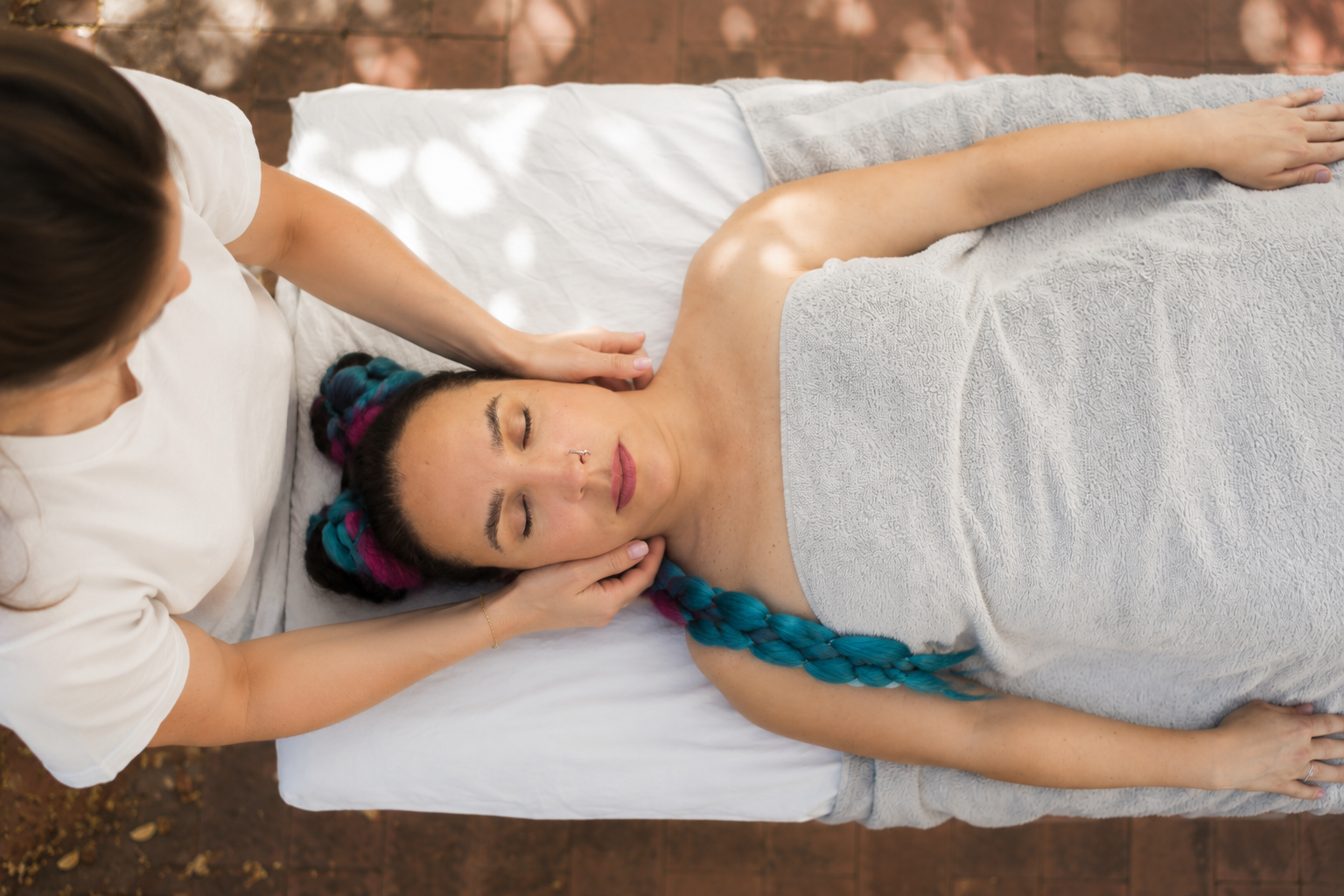
The Healer Becomes the Patient: A 12-Week Clinical Self-Study Into the Transformative Power of Therapeutic Touch
Before I could truly guide healing, I had to experience receiving it.
The first time she moved my hip, my body flinched before I told it to.
I felt it happen in real time: a clench, a held breath, a small involuntary bracing against a movement that posed no threat at all. I am a licensed massage therapist. I know exactly what that muscle was doing and exactly why it didn’t need to. And still, my body did it anyway.
That moment became the real beginning of this study, long before I understood what it meant.
For years, I have placed my hands on the bodies of others. I have listened to the language of muscles, studied the architecture of the human body, and learned how tension reveals itself through posture, movement, restriction, and pain. I have witnessed the moments when someone’s shoulders finally soften, when breath returns to the body, when a person who has carried years of discomfort finally feels relief.
But there was one body I had not fully studied: my own.
As a massage therapist, I have spent countless hours learning how to facilitate healing. Yet I realized that understanding healing intellectually is different from experiencing it personally. So I made a decision. I stepped away from the practitioner’s side of the table. I became the recipient. I became the patient.
For twelve weeks, I surrendered myself to the experience of receiving therapeutic massage and documented what unfolded, not only within my muscles and tissues, but within my nervous system, my emotions, my thoughts, and my awareness. What began as a personal experiment became a journey into understanding what truly happens when the human body is given consistent attention, safety, and intentional touch. Some of what I found, I expected. Some of it, I am still making sense of.
The Question That Changed My Practice
The inspiration for this self-study came from my evolving work with veteran community members and individuals seeking therapeutic care for chronic pain, injuries, and physical limitations.
Many patients arrive with a diagnosis, a painful area, a restricted movement pattern, a symptom they want addressed. But behind every symptom is a person. Someone with a history, with experiences stored in their nervous system, who has adapted, protected, endured, and carried life within their body.
As I continued working with patients, I found myself asking a deeper question. What happens when we treat the whole person instead of only the place where pain appears? What happens when therapeutic touch becomes consistent, when the body is repeatedly reminded that it is safe enough to soften? What happens beyond the muscles?
The Vulnerability of Receiving
There is a unique vulnerability in receiving care. As practitioners, we are comfortable giving. We understand assessment, technique, how to create an environment for another person to relax. But allowing ourselves to be the one lying on the table requires something different. It requires surrender, trust, and letting go of the desire to control the outcome.
Before beginning this study, I was cautious about seeing patients repeatedly. As someone highly sensitive to the therapeutic environment, I was deeply aware of the importance of boundaries, practitioner preservation, and maintaining a healthy clinical relationship. During my massage therapy clinical training, I specifically requested opportunities to work with different individuals rather than repeatedly treating the same person. At the time, I believed this expanded my skills.
What I did not yet understand was the healing power of continuity. The body does not always transform through a single moment. Sometimes it transforms through relationship, through consistency, through being witnessed over time.
My work with veteran patients changed my perspective. I began to understand that ongoing care is not simply repetition. It is a process.
The Purpose of This Study
This 12-week clinical self-study was created to explore the experience of receiving consistent therapeutic massage from the inside out. This was not a controlled clinical trial, and it was not intended to represent every individual’s response to massage therapy. Instead, it was a practitioner-led exploration of my own body, awareness, and healing process.
I wanted to understand how the body responds when it is consistently supported. What patterns reveal themselves when we slow down enough to listen. How the nervous system responds to intentional touch. What emotions, memories, or awareness arise when the body begins to release long-held patterns. And how this understanding could transform the way I care for others.
The Journey
For twelve weeks, I received weekly therapeutic massage sessions from the same practitioner, a deliberate choice, not a convenience. Keeping that one variable constant meant that whatever changed over the course of the study, in my body, my nervous system, or my awareness, couldn’t be explained away by inconsistent technique or an unfamiliar hand. Sessions ranged from one to two hours and incorporated deep tissue and therapeutic massage techniques. After each session, I documented observations across four areas.
The Physical Body. Muscular tension, tissue changes, mobility, areas of restriction, sensations during treatment.
The Nervous System. Breath patterns, guarding responses, relaxation capacity, reactions to movement and touch.
The Emotional Body. Memories, emotional responses, internal reflections, shifts in awareness.
The Practice of Healing. Practitioner presence, therapeutic relationship, treatment planning, integrating medical massage with holistic care.
By the end of the study, one region of my body had told me more about chronic holding than a decade of studying other people’s bodies ever had. I’ll get to that.
What I Discovered
I began this study thinking I was going to learn more about massage. What I discovered was that I was learning more about being human.
The body is not simply tissue, anatomy, or a collection of muscles waiting to be corrected. It is an intelligent, adaptive system constantly communicating through tension, through breath, through sensation, through the places where we hold, protect, and resist. The question is not whether the body is communicating. The question is whether we are present enough to listen.
A New Vision of Care
This journey has become the foundation for the next evolution of my practice at Yin Yang Healing Arts. My vision is to continue blending evidence-informed medical massage with a holistic understanding of the human experience, because pain is not only physical, healing is not only physical, and the human being is not only physical.
True care honors the interconnectedness of the body, the nervous system, the mind, the emotions, the spirit, and the relationship we have with ourselves. That is the standard I now hold for every session in my practice, whether someone is on the table for the first time or the fiftieth.
The greatest lesson I received during this study was this: before I could ask another person to trust the healing process, I had to experience what it meant to trust it myself.
The body is not something to be conquered. It is not something to be silenced. It is something to be understood, to be honored, to be listened to.
The body is a teacher.
What I didn’t yet know, in that very first session, was how much my own body was still guarding, or how far that guarding reached beyond the muscle I thought I was watching.
Part One of the series: The Body as a Teacher: A 12-Week Clinical Self-Study of Therapeutic Touch
Coming next, Part Two: the moment I realized that knowing anatomy and knowing how to let go are not the same thing, and what my own nervous system did before I ever had the chance to relax.
Clinical Disclaimer
This article is a practitioner-led personal self-study and reflective exploration of therapeutic massage. The observations described represent my individual experience as both a licensed massage therapist and recipient of therapeutic bodywork over a twelve-week period.
This self-study is not a controlled clinical trial and is not intended to establish medical outcomes, replace scientific research, or suggest that all individuals will experience the same physical, emotional, neurological, or personal responses.
The purpose of this exploration is to deepen clinical awareness, encourage thoughtful discussion regarding the role of therapeutic touch, and explore how consistent massage therapy may influence the relationship between the body, nervous system, and overall well-being.
Individual responses to massage therapy vary based on many factors, including personal history, health status, physical condition, stress levels, lifestyle, and individual perception.
Future clinical exploration and research are needed to further understand the complex relationship between therapeutic touch, pain management, nervous system regulation, and whole-person care.