Mapping the Body's Holding Patterns
A 12-Week Clinical Self-Study on Therapeutic Touch.
Part Five: The Neck, Shoulders, Fascia, and the Anatomy of Protection.

Every layer is listening.
I heard it before I felt it: a distinct, unmistakable pop, followed by a string of smaller, quieter ones, like a hallway of doors closing one after another.
My eyes were closed. The room was dim. For a second, I honestly didn't know whether to be alarmed or relieved.
Then the relief arrived.
What I experienced as an opening moved through my jaw and into my nasal cavity, so sudden and complete that I coughed involuntarily, the way you do when something finally clears.
That moment became one of the clearest single data points I had collected so far.
Different areas of my body had been slow to fully release throughout this study. My legs were among them, still bracing more than I wanted to admit even after weeks of consistent work. But my neck had its own stubborn grip too, one that had been announcing itself quietly, session after session, long before it finally spoke this loudly.
Earlier in the study, I had learned something about surrender. What I hadn't learned was that it doesn't reach everywhere at once. Some places hold out. This is the unfolding of those places.
From Surrender to Mapping
By the sixth week, something had shifted in me as a subject.
In the earlier weeks, I was mostly noticing my reactions. Could I surrender? What was my breath doing? What emotions were surfacing? Was I clenching? Was I resisting?
Now I started observing my body the way I observe a patient's.
I began mapping.
Where does tension keep returning? What changes after treatment? What stays?
What does the body protect, even when the mind thinks everything is fine?
The answer was becoming remarkably consistent:
My neck and shoulder girdle.
The Neck as a Recurring Site of Tension
The sternocleidomastoid (SCM), levator scapulae, and upper trapezius kept appearing in my notes.
These muscles contribute substantially to head and neck movement, shoulder positioning, and elevation, making the region a plausible place for recurring tension to become noticeable. But what interested me more than the anatomy itself was the repetition.
The same side.
The same structures.
The same familiar resistance.
Session after session.
Most other areas of my body would soften, change, or respond relatively quickly, while this region seemed to negotiate every inch of surrender.
It was a little sobering to realize that after weeks of steady work, one part of me was still holding on.
The pop I described above happened after the therapist worked specifically through my SCM and shoulder girdle with soft tissue work, at my own request.
Immediately afterward, the SCM felt noticeably softer to the touch. I could feel the difference with my own fingers before I had even sat up.
But the following day brought something else.
I noticed increased irritability and sensitivity, along with unusually vivid recollections of past people and experiences.
I can't say definitively that those experiences were caused by the treatment. I don't have enough evidence to make that claim.
But the timing was noticeable enough across more than one session that I began paying attention to it.
That distinction mattered to me.
As a practitioner, I am constantly asking patients to notice patterns without automatically turning those patterns into explanations.
So I had to give myself the same discipline.
I observed.
I documented.
I stayed curious.
I didn't decide that I knew why.
Around this same period, my notes also began to show increased tension through the right psoas, along with an asymmetry through the posterior body: more tension around the right rhomboids and lower thoracic region, extending toward the area around T12 and the right iliacus.
The more I looked, the less isolated any single area seemed.
The Pattern I Recognized in Myself
One of the more humbling discoveries of this stretch of the study had almost nothing to do with muscles.
I kept catching myself elevating my shoulders during ordinary moments of the day.
Driving.
Standing at the counter.
Looking at my phone.
Thinking about work.
The exact pattern I routinely cue my yoga students to release.
Drop your shoulders.
Soften your jaw.
Let the breath move.
I knew the correction professionally.
Living the correction personally was another thing entirely.
I actually laughed out loud in my car once, sitting at a red light, when I caught myself doing it again.
There I was, a licensed medical massage therapist and yoga teacher, unknowingly carrying my shoulders toward my ears.
The body has a sense of humor.
That gap between knowing and embodying became one of the quieter, more honest threads of this entire study.
What changed wasn't only the tension itself.
It was how quickly I noticed it.
Before this study, I could carry tension through an entire day without registering it.
Now I could catch it in real time.
My shoulders are climbing.
My breath just went shallow.
My neck is bracing again.
Researchers use the term Interoception for the ability to sense what is happening inside the body. For me, the practical lesson was much simpler:
You can't soften something you don't know you're holding.
Awareness had become part of the treatment.
When Consistency Became Information
General relaxation has real value.
But the sessions that gave me the clearest, most trackable changes were the ones with a specific target: SCM, levator scapulae, shoulder girdle, posterior cervical muscles.
Following the same structures across multiple weeks gave me something I hadn't had at the beginning of this study.
A point of comparison.
Instead of wondering whether I felt different, I could ask a more useful question:
Different where?
That specificity changed the way I looked at my own body.
I stopped thinking about tension as one large, vague sensation.
I started seeing patterns.
And once I started seeing patterns, I also started noticing that they didn't necessarily respect the boundaries of the muscle I had originally focused on.
The Front of the Body Tells Its Own Story
As treatment expanded into my pectoral muscles, another piece of the map began to make sense.
I had been paying so much attention to the back of my neck and shoulders that I had underestimated how much the front of my body could influence the way I carried myself.
The pectorals contribute to shoulder positioning, and years of forward posture, repetitive movement, and habitual bracing can affect the way the entire upper body organizes itself.
Working through that region gave me a physical sense of openness through my chest and shoulders that I hadn't expected from sessions I had initially thought were primarily about my neck.
It was one of those moments when the body quietly corrected my assumptions.
I had been looking at the place that hurt.
The body was asking me to look at the pattern around it.
Treating only the back body may not always be enough.
Sometimes the restriction begins somewhere else.
Sometimes what feels like one problem is simply the place where a larger pattern becomes easiest to feel.
There may be another layer to this. Fascia, the thin, continuous web of connective tissue that wraps and links nearly everything in the body; muscles, bones, nerves, blood vessels, even the organs. It doesn't stop at the edge of any one muscle, and it doesn’t stop at the surface. That may be part of why the tension I was tracking in my neck kept showing up somewhere else. The science on fascia is still evolving, and I'll look at it more closely later in this series. For now, I'll say that I began to think of my body less as a set of separate muscles and more as one connected whole.
The Body as a Map of Protection
This was where the title of this part of the study began to make more sense to me.
Holding patterns are not necessarily failures of the body.
They can be adaptations.
A muscle contracts because something is happening.
A shoulder rises.
A jaw tightens.
A breath becomes shallow.
A person leans forward.
A body learns a position and eventually stops announcing that it learned it.
By the time someone comes in for massage, they may not experience any of that as a choice.
It simply feels like their body.
That changed the way I thought about my patients.
Many people who come in for care do not simply have "tight muscles." They have patterns built over time through injury, repetitive movement, stress, and whatever forms of protection their bodies have learned along the way.
The goal isn't to force those patterns to disappear in a single session.
It is to offer consistent, specific attention long enough that the person can begin to notice what is happening, feel what changes, and give the body an opportunity to respond.
I still don't fully know why my neck held on so much longer, and so much more stubbornly, than almost anywhere else.
But I was beginning to suspect the answer wasn't entirely physical.
And that possibility made me curious about something beyond the muscles themselves.
Because if the body can learn how to protect us through tension, posture, breath, and attention, then perhaps those patterns don't exist only in isolation.
Perhaps they also shape how we meet the world.
How we respond to other people.
How quickly we brace.
How difficult it is to soften.
And how much of that happens before we even realize we're doing it.
That was a question I wasn't ready to answer yet.
But I was ready to keep observing.
For Practitioners
This study was teaching me something I couldn't have learned from treating other people alone:
Sometimes the most useful thing a practitioner can do is become a better observer of their own body.
Not because our experiences are identical to our patients'.
They aren't.
But because inhabiting the receiving end of care changes what you notice.
It reminds you how vulnerable it can feel to surrender control.
How subtle a change can be.
How much information lives in a breath, a muscle tone, a hesitation, a flinch, or the moment someone finally lets their shoulders drop.
And sometimes the body doesn't need us to force it to release.
Sometimes it needs us to notice that it is holding something in the first place.
Coming Next
Part Six: Presence Between Two Nervous Systems
What I learned about my own presence by paying attention to my practitioner's, and the surprising science behind why two nervous systems in the same room never stay fully separate.
Clinical Disclaimer
This article is part of a practitioner-led personal self-study and reflective exploration of therapeutic massage, not a controlled clinical trial. Individual responses to massage therapy vary widely based on personal history, health status, and many other factors.
Breath as the Bridge
A 12-Week Clinical Self-Study on Therapeutic Touch.
Part Four: Moving From Control Into Surrender.

Inhale for three. Hold for six. Exhale for nine.
I was repeating the count under my breath like a small, private incantation, mostly because I didn’t know what else to do with my mind. Somewhere around the fourth cycle, as her thumbs settled into a familiar knot along my shoulder, something shifted that I hadn’t expected counting to be able to do. The knot stopped being a threat. It just became a knot.
It’s almost funny, in hindsight, that the thing which finally helped me surrender was a system. A count. A structure. Of course it was. Some part of me clearly needed permission to let go, and permission, it turned out, could come in the form of numbers.
It occurred to me later that breath was, in some sense, the opposite of the wall I’d described the week before. That wall went up to protect me from what I might absorb from someone else’s presence. Breath never asked anything of me, never carried anyone else’s weight, never needed to be managed or read. It was simply mine, and it had never once left. If I was ever going to trust something enough to let my guard down on that table, it made sense that it would be the one thing that had never given me a reason not to.
For the first several weeks of this study, I kept running into the same pattern. I understood anatomy, attachment points, and where restriction commonly lives in the body. What I did not have was an easy way to stop directing the experience from the inside. I found myself monitoring. Evaluating. Trying to optimize each moment of the session, even while lying still. Week five became a turning point because I finally brought in a tool I already knew deeply as a yoga instructor, one I had somehow never thought to use on myself: my own breath.
The Experiment
During this session I deliberately worked with breath counts. I started by inhaling for three counts, holding for six, and exhaling for nine. Partway through, I shifted the pattern: inhaling for six, holding for three at the top, exhaling for nine, and pausing briefly after the exhale before beginning again.
If you’re reading this somewhere quiet, try it with me for a moment. Inhale for three counts. Hold for six. Exhale for nine. Notice anything, even something small, before you keep reading.
Rather than trying to force relaxation, I used the counting itself as an anchor for attention.
The effect was noticeable almost immediately. As the therapist worked through areas of tension, I could feel a kind of separation forming between the raw sensation in the tissue and my emotional reaction to it. A tender spot could simply be tension asking for attention rather than something to brace against or fight. That distinction, sensation versus resistance, became one of the clearest findings of the entire study, and the exact thing I’d been missing since week one.
What Changed in the Technique, Too
This session also introduced new contact: more knuckle work, forearm and elbow pressure, particularly through the SCM, traps, and shoulders. The increased surface contact created a different quality of connection, more flow, more intention, than hands alone had given me in earlier weeks. I made a mental note, lying there, to bring more of this into my own sessions with patients. A skilled practitioner, I was reminded, never really stops being a student, even several years in.
Physically, I also identified something new: noticeable asymmetry through my back, with more tension on the right side running from the rhomboids down toward T12 and the iliacus. It raised an honest clinical question I still don’t have a full answer to. What is that side of my body holding that the other isn’t?
Where Guarding Still Lived
Not everything released that week. When my arms were stretched, the combination of breath and awareness let me soften into the movement without bracing, the same arms that had wanted to assist and control back in week one. My hamstrings and legs told a different story. The guarding there stayed firmly in place, the same fear I’d first noticed around my hips in the very first session, still standing its ground even after a month of consistent work. It left me with a genuinely useful question for myself: what am I protecting when someone works around my legs and hips?
I don’t have a tidy answer. But naming the pattern, rather than pushing past it, felt like real progress in itself.
Before this study, I would have described receiving as something passive: lying still and letting someone work on you. I don’t believe that anymore. Receiving, done well, is an active relationship. It asks for awareness, breath, trust, and a real willingness to listen to what’s happening in real time. The person on the table isn’t passive. They’re participating, just through presence instead of effort.
Why Breath, Specifically
There’s a longer story behind why breath became my anchor, one that started well before this study and well before I ever became a massage therapist or a yoga instructor. I’ve carried a fair amount of abandonment in my life, the kind that teaches a nervous system early on not to fully expect people to stay.
Breath has been the one relationship that never left.
It’s been with me since the very first moment of my life, and it will stay with me until the last, the one continuous thread linking this body to whatever exists beyond it. I don’t need that to hold up under a microscope for the trust to be real to me, though I’ve come to appreciate, the way I wrote about in the last piece, that the spiritual and the scientific aren’t actually in competition here. Establishing a felt sense of safety with my own breath, long before this study ever began, is a large part of why it worked so well as an anchor on that table. I wasn’t learning to trust breath for the first time in week five. I was returning to something I already trusted completely, and asking it to do a new kind of work.
This is something I teach as a yoga instructor, long before I ever thought to bring it onto a massage table for myself. When a student is in pain, physical or otherwise, breath isn’t just a distraction from that pain. Used well, it creates enough space around the pain that a person can actually look at it, instead of only enduring it. That’s exactly what happened for me in week five. The breath didn’t make the tension in my shoulder disappear. It gave me enough distance from the fear wrapped around that tension to finally ask what it was there for in the first place, rather than just gritting my way through another hour on the table.
What This Means for My Patients
This has real implications for how I think about chronic pain in the people I treat. Many of them have developed protective patterns in their bodies over years, sometimes decades: bracing, guarding, a nervous system that struggles to trust even a skilled, gentle hand.
Forcing release rarely works on a body like that.
What seems to work instead is creating enough safety, session after session, for the body to soften on its own timeline.
Massage, at its best, isn’t a battle against tension. It’s a conversation with the nervous system, one that has to be allowed to happen at its own pace.
The Larger Lesson
Breathing is one of the few processes in the body that runs automatically and can also be consciously directed. Research in psychophysiology has explored how slow, paced breathing can influence the autonomic nervous system, including increased parasympathetic activity and improved regulation of stress responses. During this session, that research stopped being an abstraction and became something I could feel directly, count by count.
Teaching breathwork to students for years did not mean I had fully embodied it myself. My body showed me, clearly, where I still wanted to control the outcome rather than trust the process. That is a humbling thing to learn about yourself on a table you can’t get up from mid-realization.
The breath had become exactly what the title of this piece promised, a bridge: between holding and releasing, between control and surrender, between awareness and simple acceptance of what was already true.
The body wasn’t asking me to fix it. It was asking me to listen.
The hips had let go weeks ago. My arms were finally following. But my legs were still holding onto something I hadn’t found the shape of yet, and some part of me suspected it would take more than counting to get there.
Coming Next
Part Five:
What three more weeks of consistent, targeted work revealed about the one region of my body that refused to fully let go, no matter how many sessions I gave it…
Clinical Disclaimer:
This article is part of a practitioner led personal self-study and reflective exploration of therapeutic massage, not a controlled clinical trial. Individual responses to massage therapy, including breathwork, vary widely.
When the Body Releases
A 12-Week Clinical Self-Study on Therapeutic Touch. Part Three: Emotional Processing and the Therapeutic Relationship.
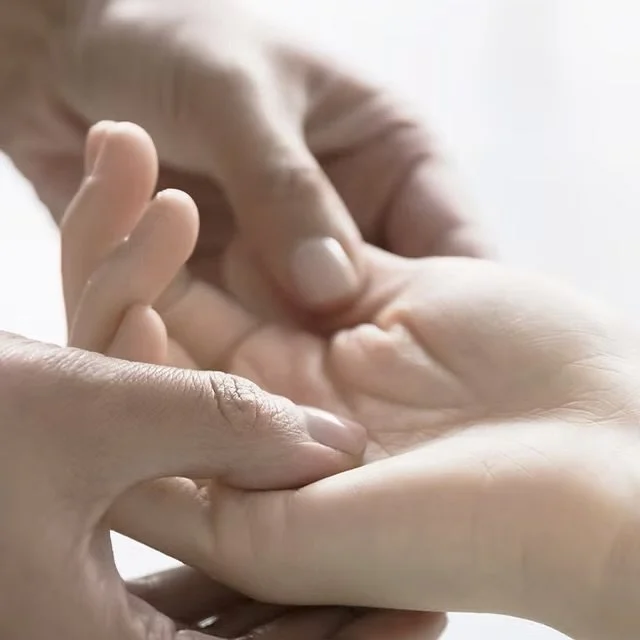
Halfway through the session, I opened my eyes and asked her if she was okay.
I hadn't planned to say anything. I was supposed to be the one receiving, the one practicing stillness and silence, the one letting go. But something in the room had shifted, and my body noticed it before my mind caught up.
I anticipated this study would teach me about muscle tension, mobility, and pain patterns. By weeks three and four, I understood I was also going to learn something about relationship, specifically the relationship between the person receiving care and the person providing it.
Week Three: When the Experience Changed
By the third session, I had developed a clear expectation of what my sessions would feel like. My body had grown familiar with a certain rhythm and pressure, the particular way this practitioner moved through a session, the order she worked in, the depth she tended to settle into.
This session broke that pattern. The touch was lighter, almost hesitant, the rhythm unfamiliar, and I found myself less connected to what was happening than in previous weeks. My first instinct was mildly territorial, a small, half-embarrassing thought along the lines of this isn't how she usually does it. Rather than sitting in that judgment, I stayed curious about it instead.
What came next is harder to describe cleanly, but I want to try, because it's honest. As she worked, I became aware of something beyond the physical. It felt less like a thought I was having and more like data I was receiving, small, wordless impressions about her state that I hadn't asked for and couldn't quite place. I've always had a strong capacity to read people this way, to pick up on what someone is carrying before they say a word, and lying still with my eyes closed seemed to sharpen it rather than quiet it. It didn't feel good. It felt like absorbing something that wasn't mine, and my body responded the way it apparently always has: by trying to put a wall up.
That wall is an old friend of mine. It's the same instinct that had me requesting a different body to work on with every new patient back in massage school, avoiding the kind of repeated, layered familiarity that this entire study is now asking me to sit inside of. In the moment, on the table, I recognized it clearly for maybe the first time: this is why I don't love being touched by unfamiliar people. Not fear of the touch itself, but fear of what I might pick up along with it.
I don't remember deciding to speak. I just heard myself ask, quietly, are you doing okay today? There was a pause. Then, I'm fine. Then, actually, no. She didn't go into detail, and I didn't ask her to. She said enough for me to understand that something outside of work had been sitting heavy on her that week, and I let it stay there, unexamined, because it wasn't mine to hold. But the shift in the room between her first answer and her honest one was unmistakable. The pressure, the intention, the sense of connection, all of it had already changed before either of us said a word, which was exactly what had pulled me out of my own stillness in the first place.
What I noticed was this: the quality of touch is shaped not only by the hands doing the work, but by the state of the person behind those hands. That's not a criticism of her. It's simply true, and it's true of every practitioner, including me, on the days I show up carrying something of my own.
This gave me an important reflection as a clinician. The practitioner enters the treatment room as a full human being, not only as a set of trained hands. Presence is part of the technique, not separate from it.
It also gave me a more personal one. I noticed my instinct, even while lying on the table receiving care, to want to support the person caring for me. That instinct is not wrong, but it raised a real question for my own practice of receiving: can I allow myself to be cared for without immediately stepping into the role of caregiver myself? For anyone drawn to healing work, that is worth sitting with.
I came back to an answer I already believed as a clinician but hadn't fully applied to myself. A practitioner's responsibility is not to carry the patient's experience for them. It's to create a safe, grounded environment where the patient can move through their own process. That distinction runs both directions. My job wasn't to fix what my practitioner was going through that day, and it wasn't my job to manage my own healing from a place of vigilance either. Both roles ask for the same thing: presence without ownership.
Research across healthcare disciplines, not just massage, consistently points to the relationship itself as part of the outcome. Trust, communication, and a provider's genuine presence measurably shape how care is received, independent of technique alone. Sitting on the table that week, I wasn't just observing a personal moment between two people. I was feeling a documented, studied phenomenon happen directly to me.
Week Four: A Quieter Shift
The fourth week was physically straightforward, a deep tissue session that I simply enjoyed. My body responded well to deeper pressure, and there wasn't a dramatic emotional or energetic shift to report, no unexpected conversation, no unfamiliar rhythm, just an hour of steady, competent work, the room quiet, my breathing slow, nothing asking to be noticed beyond the pressure itself.
What did shift was something quieter and more internal. In the days surrounding that session, I found myself reflecting on relationships, acceptance, and what it means to hold care for someone without needing them to change. That reflection didn't originate on the table. But the increased body awareness I had been building over the previous weeks seemed to carry into how I was noticing my own thoughts more generally, as though the practice of paying closer attention to my body had quietly taught me to pay closer attention to everything else too.
I didn't have language yet for what had happened in week three, that sense of reading someone else's state through my own body. I would find better language for it later in this study, once I understood it wasn't just intuition. It had a name.
The Larger Pattern
Massage research consistently supports benefits related to relaxation, stress reduction, and pain management. Many people also report emotional experiences during bodywork, particularly when the body enters a state of deep relaxation. A session does not necessarily release one specific emotion tied to one specific muscle. More likely, therapeutic touch creates the conditions for a person to notice sensations, thoughts, and feelings that were already present beneath the surface of daily life.
For my own patients, this reframes what "results" can look like. A person may not simply need their painful area addressed. They may need the experience of being consistently, safely attended to, long enough that their body and their emotional awareness both have room to speak.
The hands may begin the conversation. But the body decides how it responds.
I keep coming back to that moment of opening my eyes and asking a question I hadn't planned to ask. I still don't fully know what made me do it. But I know it taught me something I couldn't have learned with my eyes closed.
Coming Next
Part Four:
The breathing pattern that finally let me separate a knot in my shoulder from the fear I'd been holding around it.
Clinical Disclaimer:
This article is part of a practitioner led personal self-study and reflective exploration of therapeutic massage, not a controlled clinical trial. Individual responses to massage therapy vary widely. Details involving other individuals have been generalized or omitted to protect their privacy.
The Body Begins to Speak
A 12-Week Clinical Self-Study on Therapeutic Touch. Part Two: Awareness, Guarding, and Learning How to Receive.
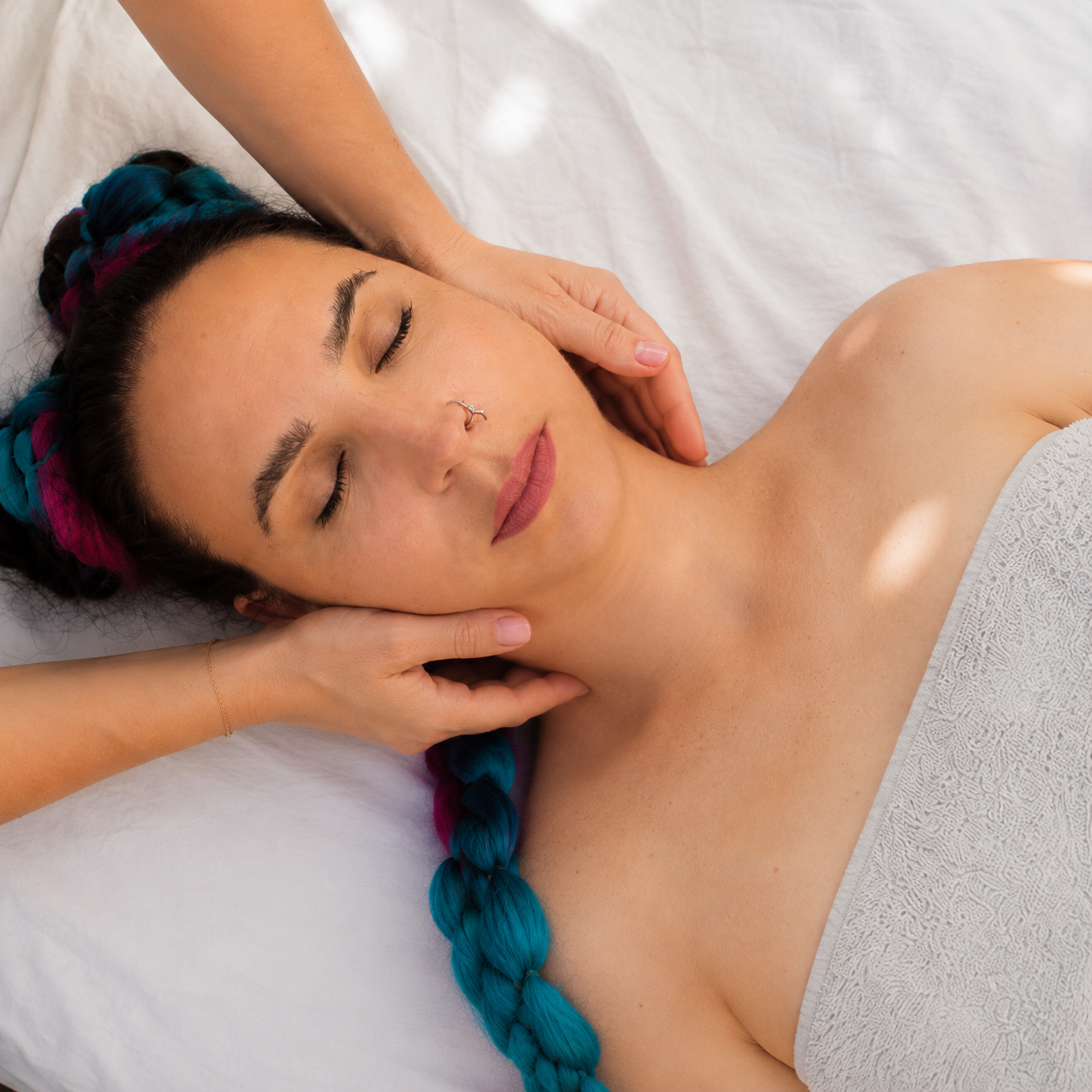
The region that told me the most about my own body turned out to be the one I never suspected. Not my hips, where fear surfaced first, or my legs, where the guarding ran deepest and stayed longest, but my neck: quiet, unremarkable, and holding more than anywhere else. I didn't know that yet in week one. I only found it because I kept showing up, week after week, long enough for my body to stop performing relaxation and start actually telling the truth.
That truth came slowly, and mostly in silence.
Week One: Meeting My Own Body
My first session was one hour of deep tissue work, and it was also the first time in a long while that I had been completely silent, on either side of the table. The room was warm, lit low, the kind of quiet that has a texture to it, the faint smell of oil, a heated table against my back. As a licensed massage therapist, I had expected this study to teach me more about technique, about tension patterns and mobility and the mechanics I already understood professionally. I didn't expect it to teach me, so quickly, how little I understood about my own relationship to receiving. As the therapist began moving and repositioning my body, I felt a clear pattern of clenching, a kind of muscular bracing that arrived before I had consciously decided to resist anything. Around my hips and glutes especially, my breath shortened. I noticed myself trying to help, to anticipate the stretch, to control the movement rather than simply allow it. There was a moment, small and a little embarrassing, where I actually laughed under my breath at myself: after years of guiding other people into stillness, my own body wasn't cooperating at all.
Later, I understood there was a name for what I'd felt. The nervous system is constantly scanning for safety, a process researchers call neuroception, largely outside conscious awareness. It shapes breath, muscle tone, and readiness to move before the thinking mind even weighs in. My hips didn't need permission from me to brace. They had already decided, on their own terms, whether the room was safe.
There was one unexpected moment of relief. When the therapist worked on my feet, I felt my digestive system respond almost immediately: contracting, releasing, audibly moving. It was a small, strange reminder that the body is far more connected than a diagram of isolated muscles suggests.
By the end of the session, I had noticed shifts in breath rhythm and even in the rhythm of my own heartbeat. None of this was dramatic. But it was the first real evidence of something I already believed intellectually and was now feeling directly: knowing the body professionally is not the same as knowing how to let it go.
Week Two: Where I Hold Tension
The second week brought the clearest physical finding of the early study. My trapezius, sternocleidomastoid, and levator scapulae, the muscles running through the neck and upper shoulder girdle, held more tension than anywhere else in my body. This would become a recurring thread throughout the entire twelve weeks, and, as I would learn much later, the doorway into some of the most significant changes of the entire study.
Alongside the physical tension, I noticed something emotional beginning to surface. Over the course of that week, I experienced what felt like a slow release of grief, not tied to any single event, just a background weight lifting. I want to be careful here. Emotional experiences during massage vary enormously between people and cannot always be traced directly to a specific tissue change. What I can say is that increased body awareness created the space to notice feelings that were likely already present, waiting to be seen.
I also noticed, again, the same protective pattern from week one. When my limbs were moved, particularly my legs, there was an involuntary contraction, something closer to fear than resistance. It happened faster than thought.
What This Told Me
Before the body can release anything, it has to become aware of what it has been holding. That was the real lesson of these first two weeks, more than any specific muscle or technique.
As a practitioner, I am used to observing this in patients: the guarding, the shortened breath, the flinch before a stretch even begins. Experiencing it from the other side of the table made it real in a way that years of watching it in others never had. My body had its own intelligence, and its own memory of protection, regardless of what my professional mind already understood. More than once, I caught a small voice in my head trying to direct the session, wanting to say stay there longer, or that's not quite the spot. I didn't act on it, not yet, but I noticed it was there.
Many of my patients arrive with a diagnosis and a painful area they want addressed. But behind every symptom is a person carrying a nervous system shaped by history, adaptation, and years of quiet self-protection. These first two weeks reminded me that the work is rarely only about the muscle in question. It is about helping a person feel safe enough, consistently enough, to notice what they have been carrying.
The body speaks constantly, through breath, through tension, through resistance, through sensation most people never learn to name. The real question was never whether it was communicating. It was whether I was quiet enough to listen.
I didn't know it yet, but the neck tension I'd just found was about to become the thread that ran through nearly every session that followed, long after the fear in my hips had quietly resolved itself.
Coming Next
Part Three:
What happened the week my therapist's own state changed the entire quality of my session, and the question it raised about how much of receiving is really about the person giving.
Clinical Disclaimer:
This article is part of a practitioner led personal self-study and reflective exploration of therapeutic massage, not a controlled clinical trial. Individual responses to massage therapy vary widely. This content is intended to deepen clinical awareness and encourage thoughtful discussion, not to establish medical outcomes.
The Body as a Teacher

The Healer Becomes the Patient: A 12-Week Clinical Self-Study Into the Transformative Power of Therapeutic Touch
Before I could truly guide healing, I had to experience receiving it.
The first time she moved my hip, my body flinched before I told it to.
I felt it happen in real time: a clench, a held breath, a small involuntary bracing against a movement that posed no threat at all. I am a licensed massage therapist. I know exactly what that muscle was doing and exactly why it didn’t need to. And still, my body did it anyway.
That moment became the real beginning of this study, long before I understood what it meant.
For years, I have placed my hands on the bodies of others. I have listened to the language of muscles, studied the architecture of the human body, and learned how tension reveals itself through posture, movement, restriction, and pain. I have witnessed the moments when someone’s shoulders finally soften, when breath returns to the body, when a person who has carried years of discomfort finally feels relief.
But there was one body I had not fully studied: my own.
As a massage therapist, I have spent countless hours learning how to facilitate healing. Yet I realized that understanding healing intellectually is different from experiencing it personally. So I made a decision. I stepped away from the practitioner’s side of the table. I became the recipient. I became the patient.
For twelve weeks, I surrendered myself to the experience of receiving therapeutic massage and documented what unfolded, not only within my muscles and tissues, but within my nervous system, my emotions, my thoughts, and my awareness. What began as a personal experiment became a journey into understanding what truly happens when the human body is given consistent attention, safety, and intentional touch. Some of what I found, I expected. Some of it, I am still making sense of.
The Question That Changed My Practice
The inspiration for this self-study came from my evolving work with veteran community members and individuals seeking therapeutic care for chronic pain, injuries, and physical limitations.
Many patients arrive with a diagnosis, a painful area, a restricted movement pattern, a symptom they want addressed. But behind every symptom is a person. Someone with a history, with experiences stored in their nervous system, who has adapted, protected, endured, and carried life within their body.
As I continued working with patients, I found myself asking a deeper question. What happens when we treat the whole person instead of only the place where pain appears? What happens when therapeutic touch becomes consistent, when the body is repeatedly reminded that it is safe enough to soften? What happens beyond the muscles?
The Vulnerability of Receiving
There is a unique vulnerability in receiving care. As practitioners, we are comfortable giving. We understand assessment, technique, how to create an environment for another person to relax. But allowing ourselves to be the one lying on the table requires something different. It requires surrender, trust, and letting go of the desire to control the outcome.
Before beginning this study, I was cautious about seeing patients repeatedly. As someone highly sensitive to the therapeutic environment, I was deeply aware of the importance of boundaries, practitioner preservation, and maintaining a healthy clinical relationship. During my massage therapy clinical training, I specifically requested opportunities to work with different individuals rather than repeatedly treating the same person. At the time, I believed this expanded my skills.
What I did not yet understand was the healing power of continuity. The body does not always transform through a single moment. Sometimes it transforms through relationship, through consistency, through being witnessed over time.
My work with veteran patients changed my perspective. I began to understand that ongoing care is not simply repetition. It is a process.
The Purpose of This Study
This 12-week clinical self-study was created to explore the experience of receiving consistent therapeutic massage from the inside out. This was not a controlled clinical trial, and it was not intended to represent every individual’s response to massage therapy. Instead, it was a practitioner-led exploration of my own body, awareness, and healing process.
I wanted to understand how the body responds when it is consistently supported. What patterns reveal themselves when we slow down enough to listen. How the nervous system responds to intentional touch. What emotions, memories, or awareness arise when the body begins to release long-held patterns. And how this understanding could transform the way I care for others.
The Journey
For twelve weeks, I received weekly therapeutic massage sessions from the same practitioner, a deliberate choice, not a convenience. Keeping that one variable constant meant that whatever changed over the course of the study, in my body, my nervous system, or my awareness, couldn’t be explained away by inconsistent technique or an unfamiliar hand. Sessions ranged from one to two hours and incorporated deep tissue and therapeutic massage techniques. After each session, I documented observations across four areas.
The Physical Body. Muscular tension, tissue changes, mobility, areas of restriction, sensations during treatment.
The Nervous System. Breath patterns, guarding responses, relaxation capacity, reactions to movement and touch.
The Emotional Body. Memories, emotional responses, internal reflections, shifts in awareness.
The Practice of Healing. Practitioner presence, therapeutic relationship, treatment planning, integrating medical massage with holistic care.
By the end of the study, one region of my body had told me more about chronic holding than a decade of studying other people’s bodies ever had. I’ll get to that.
What I Discovered
I began this study thinking I was going to learn more about massage. What I discovered was that I was learning more about being human.
The body is not simply tissue, anatomy, or a collection of muscles waiting to be corrected. It is an intelligent, adaptive system constantly communicating through tension, through breath, through sensation, through the places where we hold, protect, and resist. The question is not whether the body is communicating. The question is whether we are present enough to listen.
A New Vision of Care
This journey has become the foundation for the next evolution of my practice at Yin Yang Healing Arts. My vision is to continue blending evidence-informed medical massage with a holistic understanding of the human experience, because pain is not only physical, healing is not only physical, and the human being is not only physical.
True care honors the interconnectedness of the body, the nervous system, the mind, the emotions, the spirit, and the relationship we have with ourselves. That is the standard I now hold for every session in my practice, whether someone is on the table for the first time or the fiftieth.
The greatest lesson I received during this study was this: before I could ask another person to trust the healing process, I had to experience what it meant to trust it myself.
The body is not something to be conquered. It is not something to be silenced. It is something to be understood, to be honored, to be listened to.
The body is a teacher.
What I didn’t yet know, in that very first session, was how much my own body was still guarding, or how far that guarding reached beyond the muscle I thought I was watching.
Part One of the series: The Body as a Teacher: A 12-Week Clinical Self-Study of Therapeutic Touch
Coming next, Part Two: the moment I realized that knowing anatomy and knowing how to let go are not the same thing, and what my own nervous system did before I ever had the chance to relax.
Clinical Disclaimer
This article is a practitioner-led personal self-study and reflective exploration of therapeutic massage. The observations described represent my individual experience as both a licensed massage therapist and recipient of therapeutic bodywork over a twelve-week period.
This self-study is not a controlled clinical trial and is not intended to establish medical outcomes, replace scientific research, or suggest that all individuals will experience the same physical, emotional, neurological, or personal responses.
The purpose of this exploration is to deepen clinical awareness, encourage thoughtful discussion regarding the role of therapeutic touch, and explore how consistent massage therapy may influence the relationship between the body, nervous system, and overall well-being.
Individual responses to massage therapy vary based on many factors, including personal history, health status, physical condition, stress levels, lifestyle, and individual perception.
Future clinical exploration and research are needed to further understand the complex relationship between therapeutic touch, pain management, nervous system regulation, and whole-person care.
Coming Home to Myself
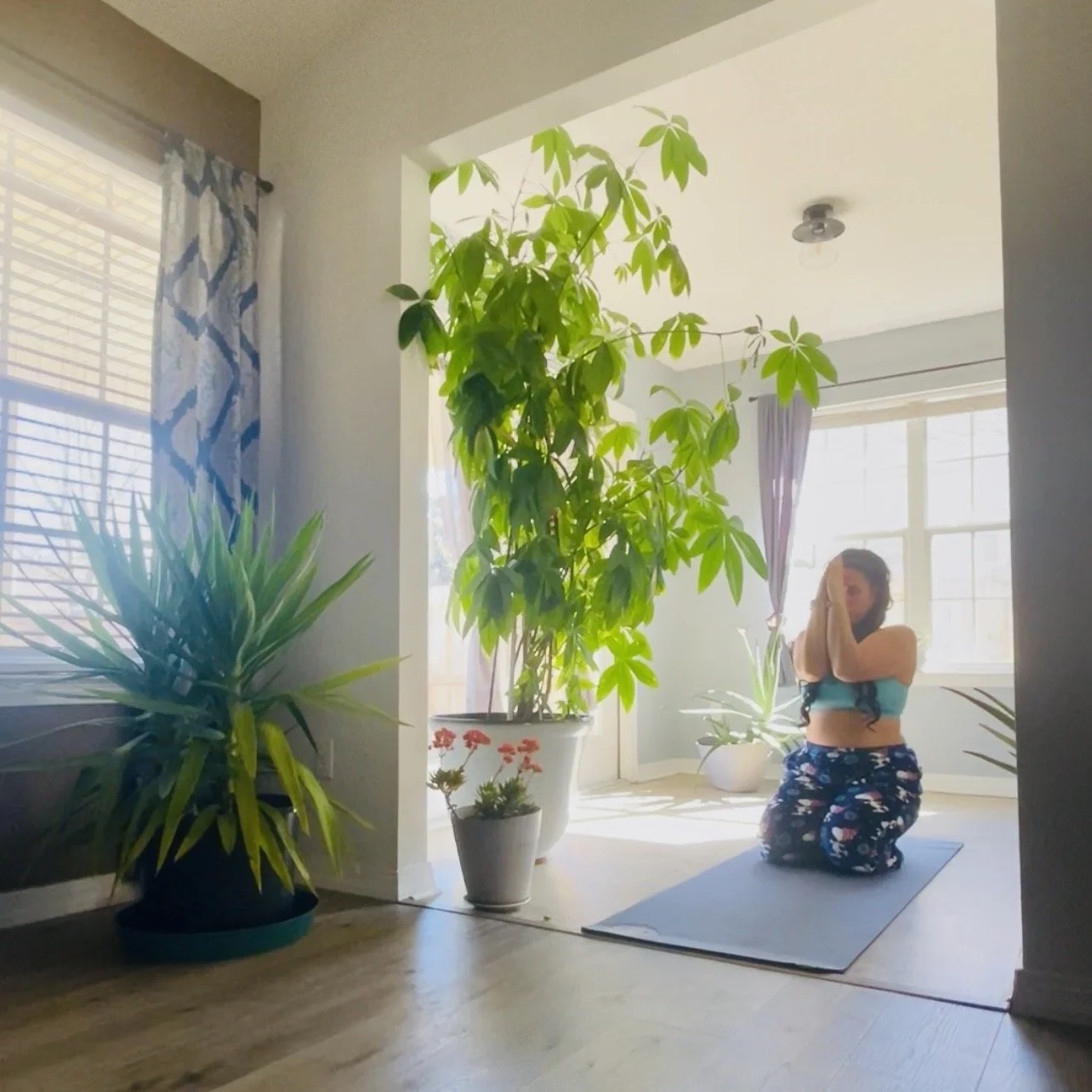
I kneel on the floor. My breath fills the room and returns to me. Sunlight pours through the windows, thick as molten gold, illuminating leaves so alive I cannot tell where they end and I begin. Dust drifts slowly, suspended, moving through skin, through thoughts, through the pulse of my heart. The house holds a silence older than memory, and I fold into it, and it folds into me.
My knees press into the mat. My bare feet rest on cool tile. My palms come together at my chest, warm against each other, as if holding something fragile and alive. Something in me bows. My eyes close without intention. My breath slows. My body softens. This hour belongs entirely to me.
Before the emails. Before the phone lights up with notifications. Before patients arrive and my hands begin guiding someone else back into their body.
I used to say I was thirsty. I was hungry. I longed for a home I could not name. I reached for it in people, in cities, in constant motion. I interlaced myself with those who carried fragments of it, hoping to hold what was never mine. Sometimes it left me empty. Sometimes it broke me. I thought if I moved fast enough, if I reached far enough, I could finally catch up to it.
Once, stillness felt dangerous. If I stopped, everything might fall apart. Now, kneeling here, my nervous system settles like a stone slipping through water. My shoulders melt down my back. My jaw loosens. My belly rises and falls in an easy rhythm. Safety flows through me. Warm. Steady. Real.
The plants stretch above me. Broad leaves reaching toward light, and toward me. Their green insistence mirrors my own. I have tended them for months, whispering encouragement, trimming, singing while I sweep, praying without knowing. They have witnessed every version of me. My grief. My gratitude. My asking. My silence.
I run my fingers along a leaf. Firm. Alive. And for a heartbeat, I feel my fingers extend through its veins. Its abundance mirrors mine. Its persistence becomes mine. I exhale. It exhales. Its growth reminds me that I have always been this expansive. That my life, my breath, my heart, is as wide and alive as these leaves. I am not only human. I am plant. I am room. I am sunlight bending through glass. I am the quiet pulse that moves between all of it.
The edge of my body softens. Less boundary, more doorway. Air thickens around me. The room hums faintly, as if everything breathes together. Sometimes it feels like prayer. Not with words. Just listening.
I notice the presence that watches this unfolding. Older than memory. Neither mine nor apart from me. It gathers the breath, the sunlight, the leaves, the pulse of my heart, and folds it all into itself. Every past rushing thought, every waiting heartbeat, every future intention bends into this moment. My body is the room. The leaves are my arms. The light is my spine. My breath threads through everything. Time loops and folds. Past and present touch each other. Human and world fold into one rhythm of being.
I kneel in communion. Not acquiring. Not chasing. Not earning. Just arriving. Body soft. Breath steady. Heart open. The room alive with witnessing. The presence gathers me and lets me go, folds me back into myself, like breath in and breath out. I am leaf and floor and breath and thought. I am human. I am room. I am awareness.
Home is inside my body, where I am safe to exist exactly as I am. Not somewhere to travel. Not something to hold. Not outside of this moment. Home is the stillness. Home is the communion. Home is the witnessing, the folding of self, world, and awareness into one. Home is alive. Home is present. Home is here.
Every morning I return. I kneel. I breathe. I listen. Sunlight moves across the leaves. Dust drifts. My heart steadies. My breath threads through everything. I am connected. I am held. I am home. May you carry this stillness with you today. Take a moment to kneel, breathe, and arrive home in your own body. Notice what is alive around you and let it remind you that you are alive too.
#ComingHomeToSelf, #EmbodiedMeditation, #MindfulLiving
From Devotion to Freedom: Healing the Grief My Body Kept
This reflection is shared as part of my healing work through Yin Yang Healing Arts. It explores grief held in the body, devotion, and the quiet wisdom of the nervous system. May it meet you gently.
I have been doing the work. I have been searching. I have been questioning.
I have been sitting with myself in quiet rooms, in moments when the world feels far away, asking the same questions again and again. Why do I not allow myself to be loved fully? Why do I retreat into solitude even when my heart longs to connect? Why do I repeat the same patterns, over and over, in different bodies, across years I cannot get back?
And now I see it.
It was never random. It was never just timing, poor choices, or unworthy partners.
It was grief.
Silent. Unconscious. Deep inside me. Grief shaping every attraction, every devotion, every risk I was willing to take for love.
For years I carried it as strength. I appeared untouchable, composed, resilient, capable. I had my life together. I had my shit together. And I did. I do.
But beneath that strength, grief was holding the reins. Unseen. Unspoken. Unprocessed. Quietly shaping the patterns of my love.
I risked everything for love. Family. Culture. Identity. Safety. I trusted my intuition. I followed my heart. I believed devotion could awaken. I believed loyalty could transform. I believed hope could illuminate.
And still, betrayal came.
The first engagement was sudden and intense. I did not know what I was stepping into. My heart aligned. My mind quieted. My body followed. And yet cracks appeared. Secrecy. Hidden motives. Subtle cruelty I sensed before I had language for it.
I left before commitment solidified, but not without consequence. My father’s disappointment. Cultural ideals disrupted. Expectations failed. I carried grief. I carried shame. My nervous system recorded it all, layer by layer, without words.
Years later, I trusted again. I devoted myself again. I imagined partnership, communion, home, children.
I quieted my intuition. I told myself patience was holy. I told myself faith was sacred. I told myself devotion could transform.
And betrayal appeared again. Infidelity. Secrecy. Absence. The truth that the person I loved could not meet me where I needed.
For over a decade, grief quietly controlled the rhythm of my heart. I repeated the same patterns in different bodies. I gave devotion to the unavailable. I believed hope could awaken them. I believed my courage could transform what was not mine to change.
My life, my love, my identity, my self worth were all caught in a rhythm I could not see.
And I loved myself anyway.
I am grateful today for the person I have become because of these experiences. I am grateful for the courage I carried, the devotion I risked, the faith I held, the love I offered, even when it met absence.
Then he appeared.
I believed it would be different. I trusted him. I opened myself fully. I devoted myself fully.
My body whispered caution. My intuition nudged. I quieted it. I told myself devotion could awaken. I told myself devotion could illuminate. I told myself devotion could transform.
It did not.
The truth was hidden. His desires were elsewhere. In the moment of intimacy, the truth surfaced. He could not meet me because he was not living in his own truth.
My body had known. My heart had suspected. My mind had hoped anyway.
I cry now. I cry for the girl who believed so purely. I cry for the futures I prepared that never arrived. I cry for devotion that was never mirrored. I cry for the nervous system that learned safety in solitude and mistrust in hope.
And I am grateful for her courage. For her faith. For her willingness to risk everything.
I see her now. The girl who disrupted expectations, who carried courage and shame in equal measure. She was brave. She was sacred. She was alive. She was whole. She was enough.
And I love her. And I love myself.
This is where the pattern ends.
I no longer offer devotion before truth. I no longer confuse intensity with intimacy. I no longer sacrifice myself to prove the purity of my heart.
Love is still welcome. Deeply welcome. But it must arrive with honesty. It must arrive with clarity. It must arrive with consistency. It must arrive with the capacity to meet me where I am real.
And if you are reading this, let it be for you too.
If your chest tightens. If memories rise. If your body aches, softens, trembles, or opens, know this.
As you bring grief into awareness, as you allow your body to feel it fully, something unfolds. Patterns soften. The heart opens. Transformation emerges.
Somewhere inside, your nervous system may also have been keeping score silently. Let this be the moment that score softens. Let this be the witness that allows release. Let this be the invitation to transform.
I inhale deeply, feel my chest expand, feel grief move, feel it soften.
I step forward with grace for who I was. I step forward with reverence for what has been. I step forward with openness for a love that does not require me to disappear to be chosen.
I am already here.
I am already enough.
I am free.
#HealingThroughGrief, #ConsciousLove, #EmotionalTransformation
Meeting the Self You Left Behind
An Invitation
There is a particular kind of discomfort that arises when we encounter who we used to be. It is not quite embarrassment. It is not quite shame. It is the tight, hot, contracting sensation we often call cringe. The moment we see an old photo, hear our younger voice, or remember how openly we once loved, and something in us wants to turn away.
Most of us assume this feeling means we were wrong back then. That we were naive, exposed, or trying too hard. This is an exploration of what it might mean instead.
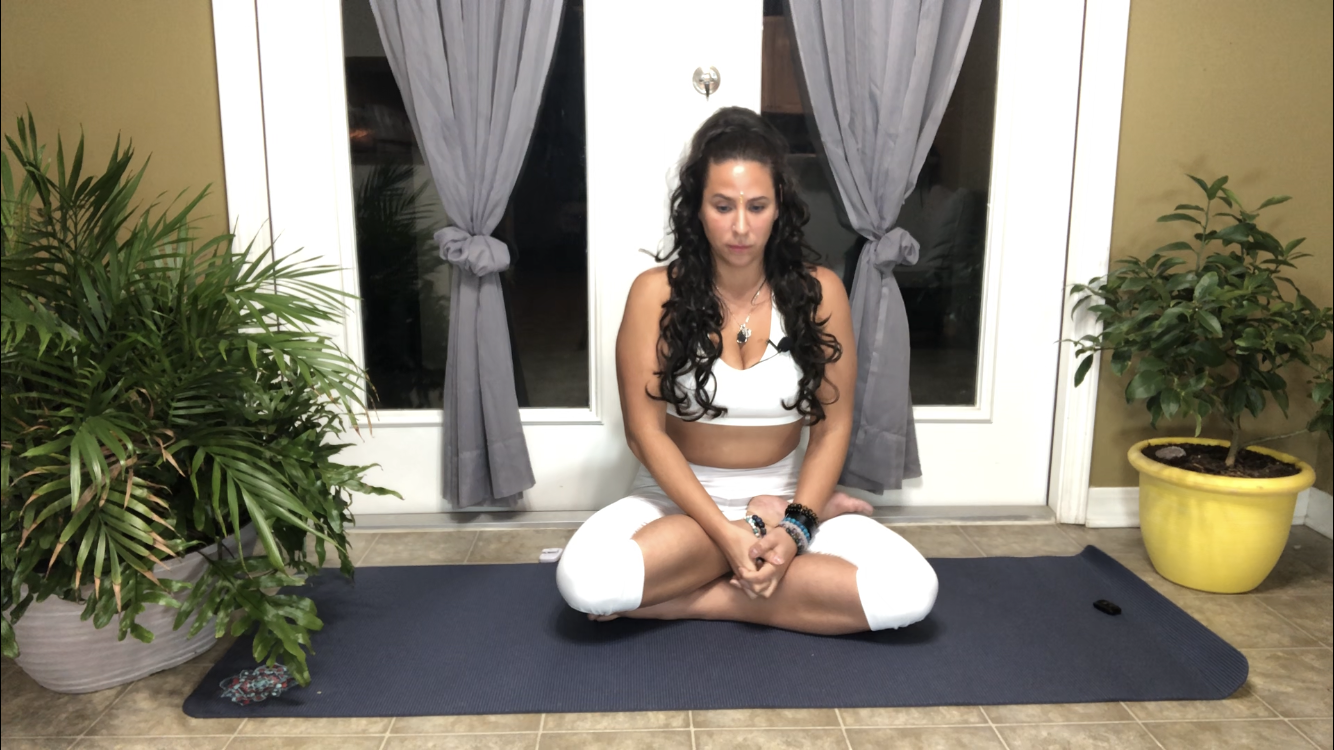
Sometimes I watch an old video of myself. I am teaching yoga. I am speaking about energy. I am looking into the camera with a softness that now feels both familiar and far away.
My body responds before my thoughts can organize. My chest tightens. My breath shortens. My shoulders pull slightly forward, as if preparing for a blow that never comes. Nothing is happening in the room around me, yet everything inside me reacts.
I am not embarrassed by her.
I am remembering how unsafe it once felt to be that open.
When I look at her, part of me wants to turn away. Not because she was wrong, but because I remember how unguarded she was. How much she hoped to be met with kindness. How little protection she had if she was not.
If you pause for a moment, you may recognize this too. Imagine seeing yourself years ago, speaking from sincerity before you learned how to contain it. Notice what your body does. The tightening in your throat. The subtle urge to look away. The small contraction that arrives before you can name it.
That sensation is not judgment. It is memory.
The nervous system does not measure time the way the mind does. When we witness our own vulnerability, the body returns to the moment when being seen carried risk. Muscles contract. Breath becomes careful. The heart pulls inward, not to punish, but to protect. This is not shame. It is a body remembering what it once had to do to survive exposure.
Beneath that contraction, something else is present. A quiet recognition. The soul remembers its own becoming. The discomfort is the meeting of who we were and who we are now. It is not rejection. It is contact.
As you read this, notice your body. Perhaps your jaw releases slightly. Perhaps your belly softens. You are not only taking in words. You are meeting a part of yourself that has been waiting to be acknowledged.
Radical self acceptance does not mean liking every version of who we have been. It means refusing to exile any of them. It means no part of us has to earn the right to belong. The awkward one. The tender one. The one who tried too hard. The one who did not yet know how to protect themselves. They all get to stay.
This is what healing actually is. Not improvement, but reunion.
For a long time, I believed the inner critic was something to overcome. Practice taught me something quieter. That voice formed during a time when visibility did not feel safe. It learned to tighten the body and sharpen awareness to prevent harm. It was not trying to punish. It was trying to keep me intact.
Nothing in you formed out of malice. Every part of you formed in response to love, even when it learned love through fear.
Now, when I watch those old videos, I imagine sitting beside that younger version of myself. I imagine placing a hand on her back, right where the tension once lived. I imagine telling her what no one could say at the time.
You are not too much.
You are not foolish for being open.
You were brave in a world that did not always know how to hold you.
As you read this, notice what happens inside. Maybe something loosens. Maybe your eyes soften. Maybe a memory surfaces that you usually keep at a distance. That is not coincidence. That is your nervous system recognizing a truth it has been waiting to hear.
This is integration. This is how the grip begins to release. This is how the parts of us that learned to go quiet in order to survive begin to return.
When we stop pushing experience away, life itself becomes practice. We notice sensation. We notice thought. We notice emotion. And instead of turning from any of it, we allow it to move.
Every moment of awareness gives the body permission to soften. Every moment of acceptance gives the soul more room to breathe.
Your past self was not a mistake.
Your awkwardness was not a flaw.
Your vulnerability was not a weakness.
It was consciousness learning how to live inside a human nervous system.
So when that familiar cringe arises, pause. Feel your feet. Feel your breath. Feel the quiet rhythm of your heart. You are not back there anymore. You are here, and you are capable of holding what once felt like too much.
This is radical self acceptance. Not cutting off what was, but letting it belong. Not fighting your shadow, but allowing it into the circle of who you are.
Presence meeting what once overwhelmed it, and discovering it can finally be held.
#RadicalSelfAcceptance, #NervousSystemHealing,#EmbodiedAwareness
Language from the Body
There are moments when the body speaks more clearly than the mind ever could. When movement slows, energy fades, and the life we have been sustaining is suddenly interrupted.
This piece was written from one of those moments.
It is a reflection on sickness not as failure, but as communication. An invitation to listen when something within us is no longer willing to be overridden. To examine the costs we normalize and the ways we continue long after what we are doing no longer aligns with who we are becoming.
I am not someone who gets sick often.
I care for my body. I move with intention. I am mindful about where I place my energy and who I allow close.
And still, sickness arrived.
It came quietly at first, then all at once. One moment I was participating in my life, fulfilling expectations and sustaining momentum. The next, my body withdrew its consent. Movement grew heavy. Energy vanished. I could no longer keep pace with the version of myself I had been maintaining.
There is something deeply humbling about illness. It removes you from your roles. It dissolves productivity. It returns you to the raw truth of being a body. Not a mind with plans or a will powered by discipline. Just a body asking to be listened to.
At first, I resisted. Sickness is inconvenient. It disrupts carefully built systems. It exposes how much of our worth has been tied to our ability to show up, to endure, to keep going.
But as stillness settled in, something else surfaced.
A question.
Not why am I sick, but what have I been carrying.
I began to see that what exhausted me was not effort alone. It was the constant override. The quiet dismissal of my limits. Old survival patterns lingering long after the danger had passed. Ways of being that once kept me safe, but now asked too much of my body.
I had been offering my energy to spaces that did not reflect my values. To systems that required my presence without fully honoring it. To versions of myself that no longer fit who I am becoming.
The body does not negotiate with these things.
It responds.
In that way, sickness felt less like something going wrong and more like something becoming honest. A pause that pulled me out of what I had already outgrown, even as my mind struggled to catch up.
We often treat illness as an interruption, something to move through quickly so we can return to life as it was. But what if some forms of sickness are not asking us to return. What if they are asking us to reorient.
What if the body is saying this way of living costs too much.
When the body is honored, everything else begins to reorganize. Mental clarity sharpens. Emotional tolerance shifts. What you once endured without question starts to feel unbearable. Overexertion loses its virtue. Old patterns loosen their grip.
This is not dramatic. It is not abstract. It is deeply practical and quietly spiritual. The body speaks when gentler signals have been ignored. Not to punish. Not to betray. But to protect. To restore integrity where it has been slowly leaking away.
The question sickness asked me was simple, but unavoidable.
Am I willing to continue living this way
at the cost of my body
at the cost of my well being
at the cost of my energy and truth
And beneath it, another question waited.
What would change if I trusted my body as much as I trust my will.
I am still listening. Still integrating. Still learning how to choose differently. But I know this now. Once you begin honoring your body, there is no unknowing. You cannot return to tolerating what diminishes you simply because it is familiar.
Sickness, uncomfortable as it is, can be a call back into alignment. A reminder that your body is not separate from your values. It is where they live. It is where truth makes itself known.
If you have ever been brought into stillness by illness and felt something quietly rearranging beneath the surface, perhaps your body was not failing you.
Perhaps it was telling you the truth.
#ListenToYourBody, #SelfCareReflection, #EmbodiedWisdom

Faith and Choice: A Dialogue With the Divine
There comes a moment in life when the question is no longer what you believe, but how you live inside what you believe.
I have sat quietly with this tension: faith and choice, destiny and free will. If faith is real, is everything already decided? And if choice is real, is everything entirely in my hands?
For a long time, those questions felt like opposites pulling me apart.
But they are not opposites. They are partners.
Faith is not the erasure of choice. And choice is not the absence of faith. They exist together, not as a contradiction, but as a relationship.
Faith, I have come to understand, is the choice made by the Creator first. The Creator chooses to believe in us. To place possibility into our hands. To trust us with breath, with consciousness, with the capacity to love, to destroy, and to rebuild again.
That is faith.
Choice, then, is our response.
I learned this not through certainty, but through love.
Someone I love has been walking through a season of deep refinement. A time shaped by difficult decisions and life altering choices. His life and mine are very different. Our paths do not align in any simple or practical way. And yet, they coincide. Not in outcome, but in meaning.
There were moments when I wanted clarity. When I wanted reassurance. When I wanted love to resolve into togetherness, into something tangible and certain. But life asked something else of me. It asked me to allow freedom. His. Mine.
Loving him did not mean holding on. It meant trusting what was unfolding in his life, even when I could not walk beside him through it. It meant honoring my own becoming as well. Love became less about possession and more about reverence.
We could not be together. And yet, the connection did not disappear. It changed form. It became a quiet dialogue with God.
In that space, I understood something essential. Faith was not asking me to secure the outcome. Faith was asking me to choose love without guarantees. To bless the path, even if it did not include me. To trust that destiny is not always about union, but about alignment with truth.
I chose that.
And in choosing love as freedom, I felt both the ache of separation and the peace of integrity. I was not abandoned. I was not mistaken. I was held.
That is how I came to understand this.
If everything were predetermined, love would lose its meaning. Obedience without freedom is not devotion. It is compliance. And if everything were only choice, with no guiding presence beneath us, life would become unbearable. The weight of meaning would crush us. We would never rest.
So both must exist.
Faith is the hand of the Creator extended toward you.
Choice is your hand deciding whether to reach back.
Destiny is not a rigid script written in stone. It is a landscape. A terrain already shaped with valleys and horizons and paths that curve out of sight. Choice determines how you walk through it. Where you pause. What you turn away from. What you sanctify simply by staying present.
Faith does not mean the outcome is fixed. Faith means you are held, even when the outcome is unknown.
Choice does not mean you are alone. Choice means you are participating.
This is where the misunderstanding lives. Many believe faith requires surrendering agency. But true faith demands agency. Without choice, faith cannot be expressed. Without faith, choice becomes frantic, fearful, and unmoored.
Choice is not rebellion against God.
Choice is conversation with God.
Every decision is a sentence spoken back into the universe. Every intention is a prayer, whether you name it that way or not. Fear speaks one language. Love speaks another. Integrity speaks slowly and clearly. Avoidance speaks in silence.
The life you live becomes the language you use in this dialogue.
Your choices do not override divine will. They reveal how willing you are to engage with it. Faith sets the horizon. Choice determines the steps. Faith says meaning exists. Choice asks whether you will align with it or resist it.
This is the sacred tension. Held and free. Guided and responsible. Written and alive.
You are not here to control life.
You are here to converse with it.
And the words you choose to speak through action, through courage, through restraint, through love, those words shape the life you will have.
Faith does not remove responsibility. It makes responsibility holy.
Choice does not remove God. It is where you meet God.
Again and again. In every small yes. In every brave no. In every moment you decide how to answer the hand that is already reaching for you.
#FaithAndChoice, #LoveAsFreedom,#DivineDialogue

When the Body Remembers Before the Mind Does

Art by: Paula Loomis
There are certain moments in life when I feel hollow in a way that words cannot quite explain. Not sad exactly. Not broken. Just paused. As if something inside me is waiting for a signal, a permission slip to begin again.
It is usually in those moments that Kundalini yoga finds me.
I do not go searching for it with intention. It appears. A class suggestion. A memory resurfacing. A quieter inner nudge that says, try this again. And every time, I am a little surprised by how precise the timing feels, as if the practice knows something about me before I do.
I am both a student and a teacher of Kundalini yoga, and yet I do not live inside the practice. I move away from it. I forget it. I do not always teach it, and I do not always practice it. Still, when something inside me begins to stall, when my inner world tightens or grows quiet, it finds me again. Not as a demand, but as an invitation.
Kundalini yoga is often described as a spiritual discipline, but for me it feels more like a conversation with the body. A way of asking questions without words. A way of listening through breath, posture, and sensation rather than thought. I come to the mat not seeking answers, but willing to witness whatever begins to move.
At first, the experience is unmistakably physical. Breath shifts. Muscles stretch, tremble, contract, and release. Heat builds. The spine feels alive, as if energy is learning how to travel upward again. The nervous system responds before the mind has time to interpret.
What I slowly began to realize is that this practice is not only moving my body. It is reorganizing my brain.
The chemistry shifts. Neurons fire differently. Signals travel new pathways, altering how my body prepares to move, respond, and orient itself in space. Muscles engage with less force and more intelligence. Bones feel carried rather than commanded. Even the impulse to act arises from a different place.
It is mind-blowing to witness how breath and posture can influence the most microscopic processes inside the body. How something so ancient can reshape something so modern as neurological patterning. And yet, this is only the beginning.
As the body reorganizes, the mind expands. Thoughts arrive with more space around them. Old mental loops loosen their grip. New perceptions emerge quietly, without announcement. I feel my consciousness stretching, refining, noticing. It is as if I am receiving a new template for thought itself.
I am not forcing transformation. I am watching refinement happen.
Through breathwork, meditation, and repetition, I witness myself shifting. Not becoming someone new, but returning to something more original. My internal frequency changes, and with it, my experience of reality. The way I interpret situations. The way I respond to uncertainty. The way I trust my own inner signals.
This is where the experience becomes exhilarating and unsettling all at once.
Because when your inner world recalibrates, your outer world responds. Relationships shift. Desires refine themselves. Old expectations dissolve. Life begins to reorganize itself around a deeper alignment, and suddenly, the familiar no longer feels true.
And beneath all of it, there is a quiet request.
Pay attention. Breathe. Notice.
The deeper I go into these practices, the more trust is asked of me. Not blind faith. Not certainty. But embodied trust. Trust in my breath. Trust in my intuition. Trust in the intelligence moving through me that does not need my permission to exist.
That trust can feel intimidating. Because once you begin to listen, you cannot unhear. Once you feel the shift, you cannot unknow it. You are asked to move through the world without the old maps, guided instead by sensation, presence, and an inner knowing that grows stronger the more you honor it.
Through Kundalini yoga and breathwork, I have come to experience a force moving through us that cannot be controlled, yet can be met. Some call it God. Some call it Source. I experience it as a living intelligence, flowing through the body, responding to attention, breath, and willingness.
The breath becomes an interface. A bridge between the physical and the unseen. Between brain chemistry and consciousness. Through it, I experience both the illusion of control and the deeper truth of alignment.
I do not write this to convince anyone to practice Kundalini yoga or breathwork. I write it as an offering. A reminder that the body remembers what the mind forgets. That wisdom lives beneath our habits, our fears, and our carefully constructed identities.
Sometimes transformation does not arrive as a breakthrough. Sometimes it arrives as a quiet internal reorganization. A soft shift. A subtle return.
And sometimes, it begins the moment you notice your breath. The moment your body pauses. The moment something inside you whispers, try this again.
If you are reading this now, take a breath. Feel the weight of your body. Notice what is moving beneath the surface. You may find that what you need is already here, quietly waiting for you to see it.
#KundaliniYoga #BreathworkJourney #EmbodiedAwakening
Forgiveness as Energetic Integration
There are moments on the healing path when disappointment does not arrive as collapse, but as refinement. Not loud. Not dramatic. Just quietly revealing what has already been true beneath the surface.
This reflection comes from one of those moments.
I have devoted years to energetic awareness, nervous system regulation, and inner alignment; practices that teach the body to listen, the mind to soften, and the heart to stay open without dissolving its boundaries. And still, life offered me an experience that carried sadness, confusion, and unmet expectation.
Not as punishment. Not as regression. But as material.
One of the more subtle illusions on a spiritual path is the belief that healing exempts us from pain. In reality, healing changes how pain moves through us. It shortens its stay, clarifies its message, and leaves less residue behind.
In this experience, I saw clearly how unintegrated wounds and shadow aspects influence behavior; how fear, survival, and unresolved identity can shape choices that feel confusing or hurtful from the outside. And I also saw something else.
Beneath behavior, there is still a being. Beneath confusion, there is still a longing for wholeness.
This does not excuse actions. It contextualizes them.
Forgiveness, as I am coming to understand it, is not an act of moral superiority. It is an act of energetic completion. It is the moment when we stop rehearsing the story in the mind and allow the body and subtle layers to release what they no longer need to hold.
If you are reading this, you may recognize the moment that follows disappointment: the quiet self-questioning, the thought that says, I should have known better, the doubt that wonders whether all the inner work actually worked.
If that voice has visited you, nothing has gone wrong.
Awareness does not prevent contrast. It changes how quickly we recognize it, how soon we listen, and how fully we return to ourselves afterward. Growth does not mean we stop encountering complexity. It means we abandon ourselves less when it appears.
Forgiveness can feel especially confusing at this stage. It may feel like letting someone off the hook or like betraying your own discernment. But true forgiveness does not ask you to forget what you learned. It asks you to stop punishing yourself for being human.
From a Kundalini Yoga perspective, forgiveness works across all layers of being. It settles the physical body where tension has been held, softens the emotional body where disappointment contracted the heart, reorganizes the mental body around clarity rather than rumination, strengthens the arc line by restoring integrity with the self, and clears the auric field by releasing unfinished energetic loops.
This is how karma dissolves: not by bypassing pain, but by meeting it with presence; not by closing the heart, but by clarifying it.
Self-compassion is essential here. Honoring the part of us that hoped, the part that trusted, the part that felt disappointed. None of these parts are naive. They are human. And they deserve tenderness, not judgment.
When we offer compassion to ourselves, forgiveness becomes natural. Not forced. Not spiritualized. Just honest.
What remains after forgiveness is not weakness. It is spaciousness. A felt sense of coherence returning to the body. A quiet confidence that we can trust ourselves, even when things do not unfold as expected.
This is not about becoming invulnerable. It is about becoming whole.
If you find yourself in the middle of your own integration, let this be a reminder. Reflection is not failure. Sensitivity is not regression. The fact that you are listening instead of numbing, softening instead of hardening, speaks to the depth of your awareness.
Nothing has been wasted.
Forgiveness is not the end of the story. It is the moment the story releases its hold on you.
#Forgiveness, #HealingThroughAwareness
A Conversation With Being
I really enjoy solitude. Not as a retreat from life, but as a return to myself.
I enjoy being with my thoughts, noticing the kinds of thoughts that arrive, and sensing the vibrational frequencies they carry. I can feel where I am operating from, or receiving from, without needing to analyze it. There is something deeply fascinating about that awareness. And there is a quiet happiness that comes with it.
Because of this, I often make it my intention to remove myself from noise. And when I cannot remove myself physically, I find my center anyway. In chaotic environments, I release the need for anything external to validate a good feeling. I stop looking outward for an experience to witness joy, and instead allow the feeling to arise from within me. This has taught me that my center is always accessible.
I look forward to moments when I can spend time with myself. Moments where I am learning myself rather than improving myself. Moments where connection is vibrational rather than verbal. It is an amazing place to be, inside yourself.
Being outside deepens this experience for me. Especially on days when the temperature feels just right. Not overbearingly hot, not piercingly cold. It feels like the beginning of fall, with a gentle coolness in the air, even though it is technically winter in Pensacola.
I am sitting outside as I write this. I can feel the sun on my skin, gentle but present. I love daylight. I love what it awakens in me.
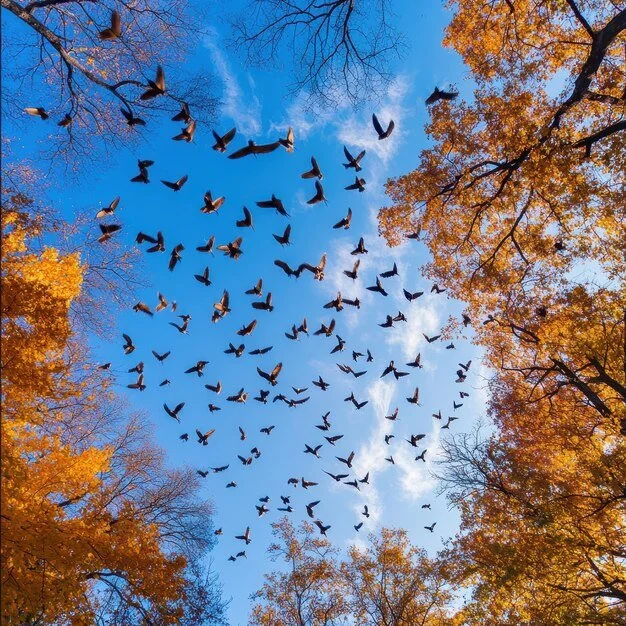
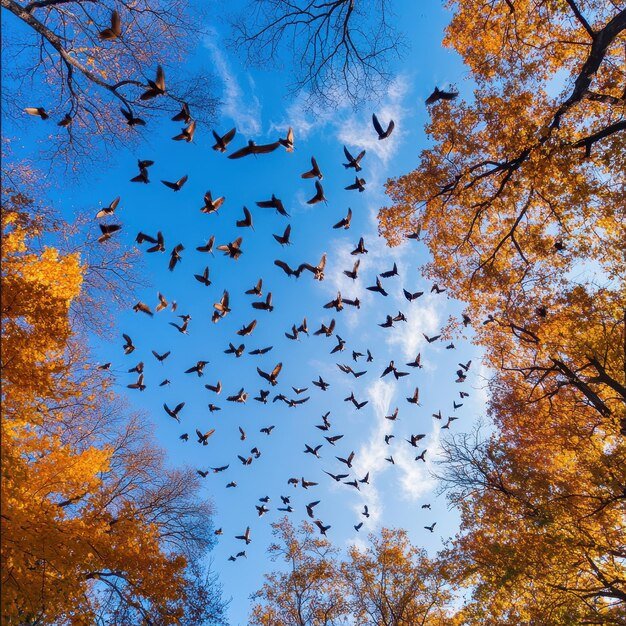
In front of me are trees dressed in yellow, brown, and amber, with hints of red woven through softer creams and greens. Palm trees stand among them, grounding the scene in contrast. It feels layered and alive.
There are birds gathered in one of the trees. A whole flock, taking up space together. They are singing. I do not know exactly what they are communicating to one another, but I know that they are. Their sound reaches me, and I receive it.
I love the idea that I am being influenced by their being in my experience. Energetically, vibrationally. Not because I am trying to interpret them, but because I am allowing myself to be affected by their presence.
As I watch them, I feel an overwhelming sense of gratitude. Gratitude that they are here. Gratitude that they are so beautiful. Gratitude that they are untouchable by my human hands, free in their expression, and generous in their existence. I feel joy simply witnessing them.
Every so often, they rise together and fly over me. As they move through the sky, they create patterns, images, and fleeting tapestries that exist only for that moment. I find myself making wishes as they pass. Sending them outward, into the birds, into the universe, without attachment.
There is a knowing in me that this experience was given to me. That witnessing them is already part of the gift. And in that knowing, I feel a quiet trust that whatever I wish for, with awareness and sincerity, is already on its way.
I am overwhelmed with gratitude. Not only for seeing this with my eyes, but for being part of an energetic exchange I do not need to fully understand. Whether consciously or unconsciously, I am in communion with what is around me.
Inside myself, I begin to pray. Not in words, but in feeling. Please let this continue. Please let the sky stay light a little longer. Let me keep admiring this vibrancy of aliveness before darkness returns.
There is something exhilarating about this awareness. Something sacred in noticing how alive everything is, and how briefly it appears in this exact form. It makes me think about the universe, about timing, about grace, about how little is required to feel deeply fulfilled.
Perhaps you have known a moment like this too. A pause where nothing needed to be fixed or understood. Where you did not need to arrive anywhere else to feel complete.
If so, maybe this is simply a reminder. That this place still exists. That you can return to it. That it has been within you longer than you remember.
In moments like this, I remember that joy does not need to be loud. Connection does not need to be complicated. And meaning does not need to be imposed.
Sometimes, it simply arrives. And we are here to witness it.
#MindfulPresence, #Solitude, #NatureMeditation

The Connection That Calls Me Home to Myself
Awareness By Presence: The Spiritual Architecture of Connection

There are people who awaken something ancient inside us without asking, without trying, without knowing.
There are encounters that do not feel accidental. They arrive quietly, yet something in them awakens a movement within us. Not the kind of movement we recognize with the mind, but the one that stirs in the deeper chambers of our being. It feels like recognition. Like anticipation. Like a subtle inner shift that says, pay attention.
This is what happened when he entered my awareness.
From the outside, nothing extraordinary occurred. No fireworks, no instant spark. Yet beneath the surface, within the unseen layers of intuition and spirit, something opened. An energetic pull rose in me—not toward his physical form, but toward the essence he carries. The way he listens. The way his presence receives my words fully, with devotion and attention.
He receives what I say with all layers of himself—not only with thought, but with instinct; not only with attention, but with presence. It feels as if he processes my truth through every part of his being. In that experience, I feel rare clarity, I feel understood. I feel aligned in places where I often feel different. And within that sense of being understood, something creative and intuitive awakens inside me.
He inspires the high priestess within me; the part of me that knows without explanation. The part of me that senses the flow of life before it appears. Being in his presence, or even in thought of him, brings me closer to my own inner knowing, my own inner guidance. It makes me feel aligned, alive, and vibrationally attuned to who I truly am.
And yet, the connection does not exist only in light. It also lives in reflection.
His emotional body carries chaos at times, and I recognize its shape because I have walked my own shadows. His unbalanced moments do not confuse me; they feel familiar. Through that familiarity, I meet him with compassion rather than judgment. I see his emotional patterns because I have experienced my own.
Even when he resists, when the ego rises, a deeper part of him still listens. I have observed him shift, correct and refine himself willingly when something in him recognizes the call to growth. Witnessing someone soften the armor of ego to step closer to their alignment is rare. It is humbling, intimate and beautiful.
And it awakens me as well.
He expands me. I expand him. The dynamic is catalytic, moving both of us into deeper aspects of our own evolution. Not because we are trying to change one another, but because the connection demands honesty. Something within it calls us to rise into our highest selves.
Through him, I explore deeper layers of my intuition. Through him, I reconnect with questions I have carried since childhood: Who am I beyond this body? Beyond the stories I tell myself? Beyond the limitations I once believed? He does not create these questions. He illuminates them. He brings out the parts of me that have always wanted to grow—the seeker, the mystic, the part of me that is ready to expand in consciousness.
The fascination I feel is not solely about him. It is about the way I rise in relation to him. About the clarity, joy, and alignment that emerge inside me. About the truth that becomes louder in his presence.
We all encounter souls who awaken something inside us. Not always lovers—sometimes friends, strangers, even brief meetings that shift our inner energy. When we notice these shifts, we begin to see how the universe teaches us, heals us, and calls us home to ourselves, back into alignment.
Every person who touches our life becomes a mirror. Some mirrors soften us. Some challenge us. Some illuminate our strength. Some reveal our wounds and our misalignments. Some bring us back into communion with our intuition, joy and clarity. Some help us remember who we truly are.
When someone awakens something ancient within us, it is not a signal to cling. It is a signal to listen. An invitation to explore the parts of ourselves that rise in their presence. A doorway into our own healing, into alignment, joy and expanded vibration.
The soul uses connection as a teacher. Attraction becomes a guide. Fascination becomes a compass pointing toward the next chapter of our evolution.
This writing is not only about a person. It is about the spiritual, vibrational architecture of connection. About the way our inner world responds when we encounter a mirror. About recognizing that every relationship can call us home to ourselves.
If someone in your life stirs something within you, pause and look inward. Ask not who they are, but who you become in their presence. Ask what opens. What softens. What expands. What truth or vibrational clarity they reveal in you.
Sometimes, the most powerful connections are not the ones that stay. They are the ones that awaken. The ones that hold up a mirror. The ones that guide us back to the essence of who we are.
They are the connections that call us home to ourselves.
If these words touch something personal in your own life, feel free to share what arose for you in the space below. There is power in allowing insight to be witnessed.
#SoulConnections, #InnerAlignment #MirrorWork

When Silence Speaks: How Relationships Reveal the Wounds We Are Ready to Heal

There are moments in our lives when a connection with another person becomes something deeper than a simple relationship or a fleeting bond. Sometimes a single person becomes a mirror, reflecting back parts of us that have been quiet for years. These moments often feel tender, confusing, painful, or transformative. Sometimes they feel like all of these things at once and more.
Recently I found myself in a dynamic with someone who carries emotional distance and avoidance like armor. Someone who responds only when he has the emotional strength to do so. Someone who reads my messages yet slips into silence when I ask something gentle, like how his birthday went. Talking to him became a dance. Some days he steps forward. Other days he disappears into himself.
I thought I was reaching out from pure love, but then I noticed something. His silence was affecting me. His distance echoed louder inside my heart than I expected. And I had to ask myself a question that changed everything within myself.
Why does his silence feel so familiar?
Why does my body respond as if this is not the first time I have felt an emotional disappearance?
That question became the doorway.
⸻
The Mirror of Connection
Sometimes we think another person triggers our emotional pain. The truth is more profound. They awaken emotional landscapes that already exist inside us. They stir the vibrations that were imprinted long before they arrived in our lives.
This connection became a mirror that showed me where my own emotional patterns were still living under the surface. Patterns of reaching outward for reassurance. Patterns of feeling unsteady when someone I cared about became quiet. Patterns of giving more love in order to feel close to someone who could not meet me fully.
He was not the cause. He was the catalyst.
His behavior illuminated the places within me that still held memories of unpredictability, of inconsistency, of needing to earn connection. Without realizing it, I had been living with emotional imprints that shaped my responses every day.
⸻
The Emotional Imprints That Rise in Silence
When I sat with myself gently, honestly, and without judgment, I began to feel what his silence was awakening inside me.
The Imprint of Needing Reassurance to Feel Safe
This is the feeling that rises when someone I care for grows quiet. It is the question that whispers against my ribs.
Is something wrong?
Did something shift?
Is it me?
This feeling is older than the present moment. It belongs to a younger version of me who learned that emotional stability was fragile. A version of me who had to check the room before relaxing. A version of me who became attuned to unpredictability long before adulthood.
The Imprint of Emotional Abandonment
The feeling of being left on read touched something deep. It was not about the message. It was the sudden absence of presence. The kind of absence that creates a drop in the body.
This feeling pointed to moments from the past where connection felt uncertain, where the emotional presence I needed was not always available. It taught me to overthink silence instead of trusting stillness.
The Imprint of Over Giving to Create Closeness
I realized how naturally I offer love, comfort, kindness, and emotional support. I offer it abundantly. Yet this part of me was shaped by environments where I learned to earn love through giving. I learned that closeness was something I had to create, not something I received naturally.
These realizations unfolded like soft truths, guiding me closer to myself.
⸻
The Rising Desire Within Me
This connection awakened a desire for emotional clarity.
A desire for emotional reciprocity.
A desire for the kind of love that meets me fully.
A desire to feel steady within myself regardless of who responds or who withdraws.
A desire to remain open without losing my center.
A desire to love without abandoning myself.
What I wanted from him was not actually about him.
It was about the part of me that longed for emotional safety.
Seeing this was not painful.
It was liberating.
⸻
Bringing My Emotional Center Back Home
I began to understand something that shifted everything.
My emotions were being fueled by reaction rather than alignment.
His silence was shaping my vibration instead of my vibration shaping the interaction.
So I turned inward.
I placed my hand on my chest and said to myself:
This is my energy.
This is my center.
This is my power.
I felt myself return home.
I learned that my emotional flow does not have to depend on what someone else does or does not do. I can create a steady inner warmth. I can be grounded in my own presence. I can love someone without losing myself. I can remain open without overextending.
When I began to anchor into this truth, everything softened.
I no longer needed his response to feel whole.
I no longer needed his reassurance to feel safe.
I no longer needed his consistency to feel steady.
My vibration came back to me.
⸻
What This Connection Is Teaching Me
This relationship, whatever shape it takes, is not here to wound me.
It is here to guide me.
It is helping me walk back toward myself.
It is helping me reclaim emotional balance.
It is helping me see which patterns are ready to be dissolved.
It is helping me access memories that shaped my emotional template.
It is helping me rise into a version of myself who can love without self betrayal.
His silence is not the problem.
His silence is the mirror.
His silence is the teacher.
His silence is the catalyst guiding me toward the emotional security that my inner being has been calling me toward.
I am learning to love from fullness rather than fear.
I am learning to stay steady in my own alignment.
I am learning to feel complete regardless of external responses.
I am learning to trust my inner voice more than the behavior of another person.
That is the gift of this connection.
And it is a gift I am finally ready to receive.
⸻
Healing Practices to Reclaim Your Emotional Alignment
1. Anchor Into Your Own Energy
Place your hand on your chest and breathe slowly. Say to yourself:
This is my energy. This is my center. This is my power.
Feel it. Let the warmth radiate through your body. This is your baseline vibration, steady and unconditional.
2. Track the Emotional Imprint
When a connection triggers you, notice the exact feeling.
Ask yourself:
Where else have I felt this?
Who or what first created this sensation?
Sit with the feeling without judgment. Let the body recall the memory. Awareness is the first step to shifting old patterns.
3. Shift Your Focus From Reaction to Alignment
When you notice yourself reacting to someone else’s distance or silence, pause. Turn your attention inward. Ask:
What vibration do I want to hold right now?
Am I choosing to feel secure, steady, and open?
Allow your inner being to lead rather than reacting to the external behavior.
4. Release Expectation
Say to yourself:
I can love fully without needing anything in return.
I can care without overextending.
I can remain open while staying grounded in myself.
Your presence and your love are enough. Let them flow freely.
5. Celebrate Your Growth
Notice each time you feel steadier despite the silence or inconsistency of others.
Recognize it as proof of your emotional sovereignty.
Honor your ability to reclaim your own energy. This is the real work of healing.
⸻
When we allow silence to be our mirror, it teaches us what words cannot. It shows us the imprints we carry, the patterns that shape our hearts, and the space inside ourselves where true alignment lives. Learning to sit in this reflection and reclaim our emotional center is the most profound act of self love.
If this mirrors any part of your own journey, I would love to hear what it brings up for you. May your silence guide you back to yourself, and may your heart feel safe in its own rhythm.
#Emotionalhealing, #Healingthroughsilence, #SelfLoveJourney
The Intelligence of Breath: Reflection on Sudarshan Chakra Kriya

Breath is one of the most subtle yet powerful tools for connecting with ourselves. Through conscious breathing, we can access deeper awareness, release tension, and restore balance in body, mind, and spirit. In this reflection, I share a personal experience with Sudarshan Chakra Kriya, a transformative breathwork practice I have engaged with for several years. This is a moment from my practice and a glimpse into what unfolds internally as the breath moves through the body, mind, and energy.
Sudarshan Chakra Kriya is a pranayama practice that was taught to me by Yogi Bhajan during my Kundalini Yoga Teacher Trainings. Rooted in the tradition of Kundalini Yoga, it is designed to cleanse the energy channels, balance the nervous system, and harmonize the physical, mental, and energetic aspects of being.
Breathwork has always felt like a bridge between the seen and the unseen, between what I can guide and what I must surrender to. After years of working with Sudarshan Chakra Kriya, pausing and returning to it, I notice that the practice continues to evolve. Each session feels both familiar and new. Each inhale and exhale carries its own story, and even moments of resistance or heaviness reveal something essential about the inner landscape.
I was seated, inhaling long and deep through my left nostril while keeping the right nostril closed. I engaged Mula Bandha, the root lock at the base of the spine, and began pumping my belly rhythmically, three pumps to one beat. The motion felt like a pulse, steady and alive, like the heartbeat of the earth moving within me. With each pump, awareness moved downward and inward, touching something fundamental, almost like uncovering a hidden current.
As I observed this pulse deepening, I became aware of its effects on both body and energy. Physically, this rhythmic engagement stimulates the diaphragm and tones the abdominal region, supporting circulation and oxygenation in the lower body. Energetically, it awakens the root and pelvic centers, lifting prana upward and beginning to clear the inner channels of vitality.
A few minutes in, the inhale began to feel heavy, almost dense, as if the air had to work to find its way in. At first, I felt impatient, noticing subtle resistance in the chest and belly. But staying with it, pumping through the weight, holding the breath, and exhaling through the right nostril revealed something profound. The heaviness itself was teaching me patience, presence, and surrender. The sensation mirrored a kind of inner purification, a clearing of stagnation that the mind might otherwise overlook. Energetically, layers of tension moved, making space for more refined awareness to flow. Mentally, I noticed old thoughts loosening and a subtle softening of habitual judgment and self-criticism.
Then, at some point, the breath changed. It became lighter and smoother. The inhale flowed more freely, almost entirely through the left side. The left nostril felt opened in a new way, shaped into a subtle channel that seemed to reach through the skull and illuminate the left side of my face from within. This was not a surface sensation but an inner movement of breath and awareness.
In yogic language, this could be described as the awakening of Ida Nadi, the cooling lunar current that governs intuition, calm, and inward reflection. Physiologically, left-sided breathing activates the parasympathetic nervous system, which supports rest, safety, and integration. It was as if the breath itself was guiding awareness, like a gentle river carving its path through a landscape, revealing hidden contours and quiet spaces I might otherwise overlook.
By the end of the session, it felt as though I was breathing from within the left side of my body, centered, quiet, and spacious. A distinct clarity and softness lingered beyond the practice, a feeling of inner luminosity and ease. I noticed how these shifts carried into daily life. Small moments of stress felt lighter, interactions felt more grounded, and even ordinary breath became a gentle guide back to presence.
Each time I return to this kriya, I am reminded that every breath has its own intelligence. When we listen closely enough, the body begins to teach us what it needs to release, what it is ready to open, and how it wishes to balance itself. Even when the breath feels heavy or the process uncertain, presence itself becomes the teacher.
Through long practice, I have come to understand that every session unfolds across multiple layers. The muscular and respiratory systems shape the physical rhythm of breath. The nervous system mediates our state of being. The energetic body reflects and directs consciousness. Sudarshan Chakra Kriya engages all of these layers simultaneously, creating a bridge between breath and awareness, matter and energy.
Invitation to Practice
Even a few minutes of focused breathing can reveal subtle shifts and insights. You might try this now. Sit comfortably and inhale gently through your left nostril while keeping the right nostril closed. Lightly engage the base of your spine and notice the movement of your belly with each breath. Exhale fully through the right nostril. Observe the sensations, the rhythm, and the quiet awareness behind each inhale and exhale. Allow yourself to simply be with the breath and notice what arises.
Personal Note
I have practiced Sudarshan Chakra Kriya for several years, including intensive periods that brought me into extended meditative states. Every practitioner’s experience is unique. The sensations, shifts, and insights I describe here are what unfolded for me. My hope is that sharing this reflection supports others in their own breathwork journey, offering a window into the depth and quiet transformation that arise when we fully engage with the intelligence of our own breath.
#ConsciousBreath,#SacredStillness
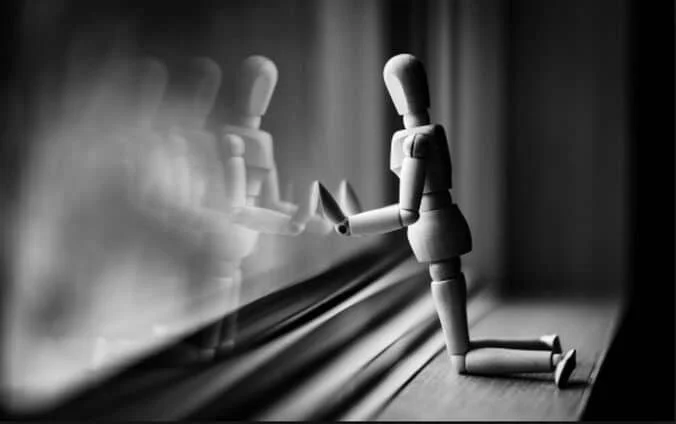
The Self We Find in Absence
What We Really Miss When Someone Leaves

What does it mean to miss someone? Is it really their absence we feel, or the echo of ourselves that they once awakened?
When someone leaves our life, whether through death, distance, or the unraveling of a relationship, absence often comes dressed as longing. We feel the hollow space where they once stood and say we miss them, their voice, their presence, their touch. Yet I have often wondered, what is it that we are truly missing?
Through my own experiences, I have noticed a quiet truth. Sometimes it is not the person themselves that we ache for, but the self that came alive in their company. With them, laughter moved through me effortlessly, like sunlight spilling across a room. With them, I softened into a gentleness I rarely allowed. With them, I felt more awake, more radiant, more whole. And when they were gone, what I grieved was not only their absence, but the part of myself they helped me remember.
I have come to believe that every person who enters our life carries a mirror. They arrive with uncanny timing, just as some hidden part of us is ready to be seen. They reflect back our beauty, our vulnerability, our shadows, our light. Whether we call it destiny, vibration, or divine orchestration, they are messengers of our becoming, illuminating corners of ourselves we might never have noticed alone.
And so when they leave, what remains? If I have truly been present, I find myself missing nothing. What lingers instead is gratitude. Gratitude for the gift of having been reflected back to myself. Gratitude for the lessons that unfolded through them. Gratitude for the sacredness of a chapter that closed in its own perfect timing. Presence turns loss into blessing. Presence allows me to honor the fullness of what was without needing it to remain.
Yet when I have not been present, when I rushed through moments or clung too tightly, the ache feels sharper. I do not only miss the person, I miss the unspoken words, the unlived tenderness, the self I never allowed to fully emerge. Perhaps this is why missing can feel so heavy. It is not always a longing for someone outside of us, but a longing for the life we glimpsed in ourselves and never fully embraced.
But nothing is ever truly lost. The people who come into our lives awaken us to a deeper self, and though they may be gone, that self remains. Their presence called something forward that belongs to us still. The gift does not leave with them. It becomes a part of who we are, echoing in our laughter, our silence, the way we touch the world.
To remember this is freedom. It softens longing into wonder. It transforms absence into presence. It teaches us that the ones we miss are not gone at all. They have woven themselves into us, and through us, they continue, as quiet sunlight on a morning we thought would be empty, as a whisper of our own radiance we thought we had lost.
A practice to try: the next time you find yourself missing someone, close your eyes and recall the version of yourself that they brought alive. Notice how it feels in your body, in your breath, in your spirit. Instead of reaching outward, turn inward and invite that part of you to stay. In doing so, you may discover that what you thought you had lost is still here, waiting to be lived more fully.
#TheSelfWeFindInAbsence, #PresenceOverLoss, #ReflectionsOnLonging

The Sacred Gift of Being Seen

What if, for one moment, you were fully seen? Not just heard, not just noticed, but deeply recognized. As if someone were holding up a mirror, revealing the very essence of your soul.
There are moments when words do more than pass through the air. They linger, luminous, as if time itself pauses to listen. In those moments, you are not only speaking, you are being witnessed. Not just heard, not just acknowledged, but felt. Embraced. As if a gentle light has settled over your being and revealed the corners you forgot were there.
Over the past several months, I have lived inside such a moment. Through hours of devoted conversation, through presence that remained steady and true, I have felt what it is like for someone to cherish the flow of my thoughts and the unfolding of my inner world. His recognition is not partial. It is whole. Intentional. At times, it feels as though God Himself placed a mirror before me, one in which I see myself clearly, deeply, entirely, as if each word carries a spark of the divine.
Solitude has always been my sanctuary. I treasure the quiet spaces where inspiration flows, where I can align with the current of creativity, what Abraham (through Ester Hicks) calls ‘tuning into Source.’ I know the joy of that flow. The pulse of alignment that feels like life itself moving through me. Yet to meet another soul who resonates with that same vibration, who delights in it alongside me, is nothing short of miraculous. It is a cocoon of joy. A luminous space I never want to leave. A room where even the air vibrates with possibility.
Here is the deeper revelation. In being seen, I see myself. His admiration does not inflate me. It reflects me. It draws me toward the parts of myself I might otherwise overlook. In that reflection, I fall more deeply in love with who I am. Gratitude rises like a tide. For him, yes, but also for the alignment itself, for the divine orchestration that allows me to experience what Rumi wrote: “The beauty you see in me is a reflection of you.” Each word I speak becomes a brushstroke, painting my soul across the space between us.
And now I invite you, dear reader, to step into this reflection. Perhaps you too have been recognized in another’s gaze. Perhaps these words are the mirror you have been waiting for. Notice the thoughts that rise. The quiet awakenings. The flickers of recognition stirring within you. Feel the brilliance. Feel the divinity. Already present, waiting to be seen. Like sunlight resting on a hidden garden, like a spark igniting beneath a calm night sky.
We all long for this. As children, we search for it in the eyes of our parents. As adults, we yearn for it in our lovers, our friends, our communities. Yet the truest form of being seen happens when life places before us a mirror that reflects back our own soul. That is alignment. That is grace. That is what it feels like to resonate fully with Source, the truth of who we are.
Perhaps, as you read these words, a spark lights within you. A candle igniting another candle. A pulse of presence. A quiet miracle flowing through the space between us. Every sentence vibrates with life. Every thought hums with recognition. Let it ripple into your heart. Let it echo the divinity that has always been there. Let it linger like the afterglow of sunrise, soft yet undeniable.
May you find the mirrors who reflect your brilliance. May you also become the mirror for yourself. May you witness your own soul with the devotion, love, and awe it deserves. And may every moment of true recognition ripple outward, igniting the world with the presence, alignment, and grace that have always existed within you.
Take a breath and ask yourself: Who or what mirrors your soul today, in this very moment? Notice quietly, reflect below, or journal if you wish. Your story may be the mirror someone else is waiting for.
#BeingSeen, SoulAlignment, #DivineReflection

The Neighbor Who Carried God
Guided by a Mother’s Spirit, Rooted in Ancestry, Revealing a Love Beyond Words

Some mornings etch themselves into the flesh of memory. They arrive without trumpets and leave a mark that will not fade. On this morning, fear and vulnerability met only one steady thing: a neighbor who came as presence, and through him I recognized the quiet movement of God in the ordinary. May these words remind you that healing often arrives not as spectacle but as the simple fidelity of someone who keeps their promise.
It was in the face of such fear that I understood the procedure could not be delayed. What had seemed abstract suddenly became urgent. The procedure had to be done quickly. It was not dangerous per se, but it would become so if I waited longer. A semi-invasive surgical procedure requiring anesthesia now loomed over me. The doctors said I needed someone present during the procedure and someone to transport me home. That requirement unsettled me more than the procedure itself.
God — whom could I trust with this? I thought, anxious and silent. My family and next of kin were not geographically available. I was alone.
I am reserved by nature. I carry my own burdens, hold my ground, and keep my needs private. Asking for help has always felt like a transgression against my pride. To reach out felt like imposing. Who was I to ask another to show up for me?
Then my father’s voice came back to me, calm and certain. If you ever need anything and we are not there, trust the Albanian neighbor next door.
Those words were not casual. They carried a history, the deep architecture of our Balkan life where family is identity and neighbors are extensions of kin. A Balkan neighbor is witness and guardian, a person whose loyalty is assumed rather than bargained. To show up without calculation is the measure of care. My father believed that truth. So did I, enough to ask.
That evening my neighbor stepped outside when I arrived home. Concern softened the lines of his face, but his words were steady. “Tell me the time tomorrow. I will take you and I will bring you home.” There were no questions, no weighing of inconvenience, only the form of a promise.
The hospital smelled of antiseptics. Fluorescent bulbs kept vigil. Machines hummed like small anxious insects. Waiting rooms filled with low conversations and the restless energy of other people’s fear. As we moved through corridors, my stomach knotted and my chest tightened. Then his voice, heavily accented and resolute, threaded through the storm inside me. “It will be all right, neighbor. You will be fine. Everything will be okay.” His assurance sank into me like a stone into water. Panic quieted. Muscles loosened. I felt less alone.
When the nurse stepped away to call for him and returned empty-handed, old dread crept back. For a moment I imagined being left here alone. Where did he go? Did work take him? I told myself I would figure it out on my own if he truly left. But beneath the resolve, there was a small, aching wanting. I wanted to believe he would be there. I whispered a fragile prayer:
God, I trust this man who has come into my life for this moment. I trust that he will be here for this when I wake. I surrender my fear and my body into Your hands. Should I not awake, I trust this man will know what to do to reach my family, for You gifted him to me.
I closed my eyes into stillness. Even as sleep gathered around me, the room was not empty. Something moved through that suspended hour, not a visible hand but a felt steadiness, a presence that seemed larger than any single body. It was an unfamiliar spirit leaning close, settling comfort over my face so that I could rest. Later I would understand that what I felt in that moment may have been his mother’s spirit guiding him. The tenderness I had known in that quiet was not only his doing; it arrived through him, an inheritance of love that translated into the devotion he offered.
When sound returned in the background, the first voice I heard was his. In his peculiar, loud accent, he spoke with my doctor, and the doctor gave him medical verbiage normally reserved for family. Rules softened in the presence of devotion. It was not a breach; it felt like an opening made by love. He had become, in that room, more than a neighbor. He was presence. So much so that I personally never saw or spoke to that doctor again.
When I opened my eyes, I saw him sitting across from me, waiting — quiet and unwavering. Relief washed through me. His stillness was intentional, not casual. Devotion sat beside me without demand or flourish. Later, as he spoke of hospital visits and the sudden loss of his own mother, I saw how grief had taught him to stand for others. Her absence had transfigured into a presence of care; her memory had become the rhythm by which he showed up. In him, she returned, alive again in service and tenderness.
As staff wheeled me toward his car, their faces registered curiosity and admiration. “He is a good man,” one whispered. I smiled and said plainly, “He is the best neighbor anyone could have.” They seemed surprised that such responsibility could belong to a neighbor alone. I knew why. This was not ordinary. This was a person choosing to remain when many would step away.
On our drive home, I thanked him for rearranging his morning, for giving himself entirely to my care. I felt safe, protected, held in a way I had not expected. He shrugged and answered simply,
“There is no need to thank me. I made a commitment to you, your health, your safety, your well-being. It feels good to do it. Every day I try to be a good human being. Simply an instrument of God.”
His voice softened as he spoke of his mother. He said that when he was with me he could feel her within him, proud and near. It was as if she were walking beside him through the hospital, directing each small kindness. Seeing him, I had the privilege of witnessing a good man who did not strive to be admirable; he simply was admirable by the way he loved.
In that presence, I understood that nothing about the morning was random. We were knotted together by culture and care, by a legacy that teaches neighbors to be family, by a mother’s spirit guiding the steps of a son. I felt chosen — chosen by presence, by commitment, by a fidelity that made a room safe.
Love revealed itself as being there. Love revealed itself as fidelity, not spectacle. A neighbor who sat in silence until my eyes opened, a voice that steadied my panic, hands-on devotion that rearranged the ordinary for another person’s need. Through him, I felt God. Through that felt presence, I understood a love that makes you certain you are exactly where you belong.
We search for miracles in grand scenes when often the miracle is the human who keeps showing up. If God moves in the world, perhaps God most often moves through ordinary fidelity. A hand that steadies you in a hospital. A voice that quiets your fear. The carrying forward of a promise born in a culture of mutual care. These acts are not lesser. They are small theologies in motion, embodiments of mercy, incarnations of presence.
Look around you. Notice the hands that steady you, the voices that calm you, the people who show up without expecting a name for their devotion. These are not ordinary. They are sacred. Allow yourself to receive such care. In receiving, you open a doorway for love and for God to move.
Love is presence. Love is fidelity. Love is the hand that steadies you, the voice that quiets fear, the neighbor who carries God.

#PresenceisLove, #OrdinaryFidelity, #SilentDevotion

When the Healer Loves

There are moments in life
where we glimpse something, or someone,
that awakens us.
Not because they are ours,
but because they remind us
of what we carry,
what we’ve healed,
what we’re still learning to love.
This is a meditation on that kind of encounter:
where attraction becomes a mirror,
and restraint becomes a form of devotion.
There is something maddening and miraculous about attraction.
When presence meets presence,
and you feel the invisible thread tighten between two gazes.
Not with words.
Not with logic.
But with some ancient knowing.
Yesterday evening,
my eyes met his,
and for a flicker of a moment that was also eternity,
I felt him feel me.
The twitch in his eye said it all.
Not flirtation.
Not play.
But that raw spark that lives somewhere
between curiosity and hunger.
I felt it like a rush in my bloodstream,
like time bent itself around us,
like my entire body leaned in
without moving a muscle.
That’s the thing.
It stirred me.
His presence stirred these quiet fires,
dormant, maybe, for years
as if something inside me had been waiting
for this particular kind of ignition.
But I can’t name it.
I don’t even think I want to.
It wasn’t his words.
There weren’t many.
It wasn’t anything obvious.
But in that moment,
it was like my soul recognized his.

Something passed between us:
wordless and invisible,
but unmistakable.
Neither of us really understood what was happening.
I’m not sure we had the emotional language
or awareness to decipher it.
But it didn’t matter.
The moment held its own weight.
It felt sacred in its not-knowing.
And then,
somehow,
our hands met.
In a magnetic choreography,
as if our palms remembered something
our minds had long forgotten.
Skin to skin.
Just once.
Just enough to send a hush
through the noise.
I still can’t name the captivating force about him.
Not exactly.
Only that his silence felt loud,
like something unfinished,
like a story I already knew the ending to,
even though we’d barely spoken.
It wasn’t his physique
or even the gravity of his complex mind,
though there was something magnetic
in the way he carried it.
It was the ache beneath it.
The unsaid.
The flicker in his gaze
that didn’t reach for me,
but somehow reached into me.
And maybe that’s what soul recognition really is.
Not certainty,
but a sudden ignition.
A quickening in the blood.
A fire that’s less about them,
and more about the parts of you they awaken.
Because something unspoken
lit up inside me.
Something wild and ancient.
Something I thought I had buried,
or integrated,
or outgrown.
But there it was:
the pulse of longing,
the ache to merge,
the hunger to offer,
to pour myself
into the hollow places
of someone else.
But then came the wave of knowing
the kind of knowing only a healer understands.
Because I saw more than his beauty.
I saw his ache.
His ache spoke in silence.
His ache called out in frequencies
only my nervous system understands.
Because I have carried that ache.
I have held it.
Tamed it.
Learned it like a language.
Mastered it into art.
And here is the great cosmic trick:
When you are a healer
who has made peace with your wounds,
you don’t just see pain in others.
You feel summoned by it.
Drawn to it.
As if loving them better
could somehow rewrite your own history.
But I know better now.
I know love is not healing someone.
Love is not fixing someone.
Love is presence.
Love is God.
And God does not interfere.
Love includes everything.
It is not light over shadow.
It is shadow wrapped in light.
It is seeing someone’s brokenness,
and bowing to its timing.
But how do I hold that line?
How do I love someone’s becoming
without shaping it?
How do I not offer the medicine
when it sits ready in my palm,
and I know it could ease the edge
of what’s ahead for them?
That is the division
between my ego
and my higher self.
The ego whispers:
You are here to help.
You can guide him.
You have the tools.
Look how close he is
to cracking open.
But higher awareness
she reminds me:
Healing cannot be forced.
Timelines are sacred.
To interfere with someone’s process
is still control,
even if it wears the costume of compassion.
And so,
I am learning a more courageous love.
The love that holds without holding on.
The love that witnesses without rescuing.
The love that allows someone to stay
messy and unfinished,
without making their chaos
a project.
I am learning that sometimes
the attraction is not about them.
It is about me.
The part of me ready to receive.
The part of me that longs to be seen
the way I see others.
The part of me that wants to be loved
without earning it.
Without guiding anyone back to themselves
in exchange.
This dance between us may never bloom.
Or it may bloom into something
I cannot yet imagine.
But its gift
is already rooted in me.
That is gratifying.
And rapturously delicious.
It is showing me how far I’ve come.
How deeply I feel.
How much I trust my intuition.
How ready I am
to love
without needing to lead.
I wonder how many of us
have stood in this place.
This in-between.
Where your soul says yes,
but your wisdom says wait.
Where you feel the pulse of potential,
and yet bow to the art of patience.
To the lovers,
the healers,
the space holders,
the ones who see into the cracks of others,
I say this:
You do not need to shape someone into their healing.
You do not need to prove your love
by sacrificing your boundaries.
You do not need to collapse
into the ache of their becoming.
Your presence,
your stillness,
your own healing
is enough.
Let love be an invitation,
not an intervention.
Let love be a quiet flame,
not a wildfire.
And if they rise,
if they rise into themselves
and meet you there
with open eyes and open hands,
then may that be holy.
But if they do not,
let that be holy too.
You are not here to save them.
You are here to stay true
to the sacred path
of your own becoming.
And sometimes,
that is the highest form of love
there is.