Meeting the Self You Left Behind
An Invitation
There is a particular kind of discomfort that arises when we encounter who we used to be. It is not quite embarrassment. It is not quite shame. It is the tight, hot, contracting sensation we often call cringe. The moment we see an old photo, hear our younger voice, or remember how openly we once loved, and something in us wants to turn away.
Most of us assume this feeling means we were wrong back then. That we were naive, exposed, or trying too hard. This is an exploration of what it might mean instead.
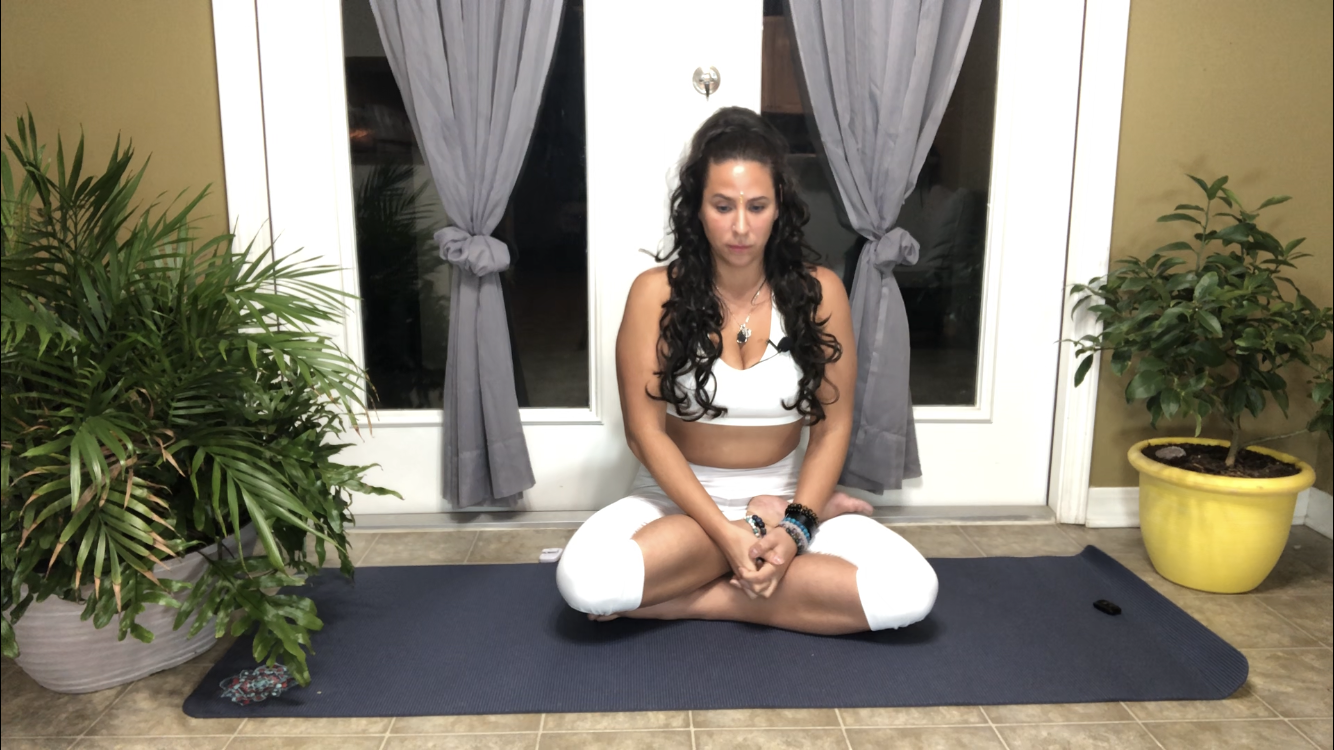
Sometimes I watch an old video of myself. I am teaching yoga. I am speaking about energy. I am looking into the camera with a softness that now feels both familiar and far away.
My body responds before my thoughts can organize. My chest tightens. My breath shortens. My shoulders pull slightly forward, as if preparing for a blow that never comes. Nothing is happening in the room around me, yet everything inside me reacts.
I am not embarrassed by her.
I am remembering how unsafe it once felt to be that open.
When I look at her, part of me wants to turn away. Not because she was wrong, but because I remember how unguarded she was. How much she hoped to be met with kindness. How little protection she had if she was not.
If you pause for a moment, you may recognize this too. Imagine seeing yourself years ago, speaking from sincerity before you learned how to contain it. Notice what your body does. The tightening in your throat. The subtle urge to look away. The small contraction that arrives before you can name it.
That sensation is not judgment. It is memory.
The nervous system does not measure time the way the mind does. When we witness our own vulnerability, the body returns to the moment when being seen carried risk. Muscles contract. Breath becomes careful. The heart pulls inward, not to punish, but to protect. This is not shame. It is a body remembering what it once had to do to survive exposure.
Beneath that contraction, something else is present. A quiet recognition. The soul remembers its own becoming. The discomfort is the meeting of who we were and who we are now. It is not rejection. It is contact.
As you read this, notice your body. Perhaps your jaw releases slightly. Perhaps your belly softens. You are not only taking in words. You are meeting a part of yourself that has been waiting to be acknowledged.
Radical self acceptance does not mean liking every version of who we have been. It means refusing to exile any of them. It means no part of us has to earn the right to belong. The awkward one. The tender one. The one who tried too hard. The one who did not yet know how to protect themselves. They all get to stay.
This is what healing actually is. Not improvement, but reunion.
For a long time, I believed the inner critic was something to overcome. Practice taught me something quieter. That voice formed during a time when visibility did not feel safe. It learned to tighten the body and sharpen awareness to prevent harm. It was not trying to punish. It was trying to keep me intact.
Nothing in you formed out of malice. Every part of you formed in response to love, even when it learned love through fear.
Now, when I watch those old videos, I imagine sitting beside that younger version of myself. I imagine placing a hand on her back, right where the tension once lived. I imagine telling her what no one could say at the time.
You are not too much.
You are not foolish for being open.
You were brave in a world that did not always know how to hold you.
As you read this, notice what happens inside. Maybe something loosens. Maybe your eyes soften. Maybe a memory surfaces that you usually keep at a distance. That is not coincidence. That is your nervous system recognizing a truth it has been waiting to hear.
This is integration. This is how the grip begins to release. This is how the parts of us that learned to go quiet in order to survive begin to return.
When we stop pushing experience away, life itself becomes practice. We notice sensation. We notice thought. We notice emotion. And instead of turning from any of it, we allow it to move.
Every moment of awareness gives the body permission to soften. Every moment of acceptance gives the soul more room to breathe.
Your past self was not a mistake.
Your awkwardness was not a flaw.
Your vulnerability was not a weakness.
It was consciousness learning how to live inside a human nervous system.
So when that familiar cringe arises, pause. Feel your feet. Feel your breath. Feel the quiet rhythm of your heart. You are not back there anymore. You are here, and you are capable of holding what once felt like too much.
This is radical self acceptance. Not cutting off what was, but letting it belong. Not fighting your shadow, but allowing it into the circle of who you are.
Presence meeting what once overwhelmed it, and discovering it can finally be held.
#RadicalSelfAcceptance, #NervousSystemHealing,#EmbodiedAwareness

Faith and Choice: A Dialogue With the Divine
There comes a moment in life when the question is no longer what you believe, but how you live inside what you believe.
I have sat quietly with this tension: faith and choice, destiny and free will. If faith is real, is everything already decided? And if choice is real, is everything entirely in my hands?
For a long time, those questions felt like opposites pulling me apart.
But they are not opposites. They are partners.
Faith is not the erasure of choice. And choice is not the absence of faith. They exist together, not as a contradiction, but as a relationship.
Faith, I have come to understand, is the choice made by the Creator first. The Creator chooses to believe in us. To place possibility into our hands. To trust us with breath, with consciousness, with the capacity to love, to destroy, and to rebuild again.
That is faith.
Choice, then, is our response.
I learned this not through certainty, but through love.
Someone I love has been walking through a season of deep refinement. A time shaped by difficult decisions and life altering choices. His life and mine are very different. Our paths do not align in any simple or practical way. And yet, they coincide. Not in outcome, but in meaning.
There were moments when I wanted clarity. When I wanted reassurance. When I wanted love to resolve into togetherness, into something tangible and certain. But life asked something else of me. It asked me to allow freedom. His. Mine.
Loving him did not mean holding on. It meant trusting what was unfolding in his life, even when I could not walk beside him through it. It meant honoring my own becoming as well. Love became less about possession and more about reverence.
We could not be together. And yet, the connection did not disappear. It changed form. It became a quiet dialogue with God.
In that space, I understood something essential. Faith was not asking me to secure the outcome. Faith was asking me to choose love without guarantees. To bless the path, even if it did not include me. To trust that destiny is not always about union, but about alignment with truth.
I chose that.
And in choosing love as freedom, I felt both the ache of separation and the peace of integrity. I was not abandoned. I was not mistaken. I was held.
That is how I came to understand this.
If everything were predetermined, love would lose its meaning. Obedience without freedom is not devotion. It is compliance. And if everything were only choice, with no guiding presence beneath us, life would become unbearable. The weight of meaning would crush us. We would never rest.
So both must exist.
Faith is the hand of the Creator extended toward you.
Choice is your hand deciding whether to reach back.
Destiny is not a rigid script written in stone. It is a landscape. A terrain already shaped with valleys and horizons and paths that curve out of sight. Choice determines how you walk through it. Where you pause. What you turn away from. What you sanctify simply by staying present.
Faith does not mean the outcome is fixed. Faith means you are held, even when the outcome is unknown.
Choice does not mean you are alone. Choice means you are participating.
This is where the misunderstanding lives. Many believe faith requires surrendering agency. But true faith demands agency. Without choice, faith cannot be expressed. Without faith, choice becomes frantic, fearful, and unmoored.
Choice is not rebellion against God.
Choice is conversation with God.
Every decision is a sentence spoken back into the universe. Every intention is a prayer, whether you name it that way or not. Fear speaks one language. Love speaks another. Integrity speaks slowly and clearly. Avoidance speaks in silence.
The life you live becomes the language you use in this dialogue.
Your choices do not override divine will. They reveal how willing you are to engage with it. Faith sets the horizon. Choice determines the steps. Faith says meaning exists. Choice asks whether you will align with it or resist it.
This is the sacred tension. Held and free. Guided and responsible. Written and alive.
You are not here to control life.
You are here to converse with it.
And the words you choose to speak through action, through courage, through restraint, through love, those words shape the life you will have.
Faith does not remove responsibility. It makes responsibility holy.
Choice does not remove God. It is where you meet God.
Again and again. In every small yes. In every brave no. In every moment you decide how to answer the hand that is already reaching for you.
#FaithAndChoice, #LoveAsFreedom,#DivineDialogue
The Art of Letting Go: Evolving Through Conscious Awareness

There is a profound beauty in the journey of expanding our consciousness—a shift where we become more aware, not just within the quiet of our minds and hearts, but also in our connection to the world around us. This awareness moves us from reactivity to presence, from attachment to release, from actions driven by ego to those led by a sense of the soul. In this elevated state, we tap into a truer, higher version of ourselves.
This journey isn’t simply about “letting go” in the way we might typically think of it. Instead, it’s about evolving beyond what we once knew and gently releasing our focus from things that once felt essential but now reveal themselves as barriers to growth. Often, it’s not an abrupt act of release but rather a natural drift away from what no longer serves us. I remember a time when I clung tightly to certain people and routines, thinking they defined me. But as I grew, I noticed that some of these attachments, though familiar and comforting, began to feel like weights holding me back from what I was becoming.
This drift away can be challenging, can’t it? There’s a part of us that resists, clinging to what feels familiar. But often, the attachment goes deeper than the person, situation, or memory itself. It’s a bond with a former version of ourselves—one that, deep down, we know is ready to transform. Letting go can feel like shedding a layer of identity, one that has served its purpose yet now needs to be released for something new to bloom.
Along this path, people and experiences come and go, weaving in and out of our lives. When we grow, when we follow our path, sometimes they don’t come along. And perhaps they weren’t meant to. Their place in our story may have been brief, leaving behind a lesson or memory that helped shaped us into embodying our highest self. As we take each step forward, we can imagine that these people, situations, and even our past selves are celebrating with us in their own way. This release isn’t a rejection; it’s an invitation for everything to blossom into its next state of being.
Sometimes, stepping into this higher state of awareness can feel isolating. Real loneliness can emerge from feeling misunderstood, from sensing that those around us can’t fully connect with the transformation unfolding within. I remember feeling this isolation myself, especially when it seemed like those closest to me couldn’t see the shifts I was experiencing. But this “misunderstanding” often has less to do with us and more to do with where they are in their journey—their boundaries, their need for healing. Perhaps our role in their lives, just as in ours, was always meant to be temporary: a spark, a challenge, or a moment of reflection that serves as a catalyst for something deeper.
In practices like bodywork, yoga, or meditation, we cultivate this awareness. We notice each sensation, every point of tension or release, each breath. These practices aren’t about escaping; they’re about arriving—coming fully into the moment. As we settle into this awareness, we often find that old emotional attachments and patterns arise and gradually soften. The body, mind, and spirit become vessels for releasing what’s unnecessary and embracing what’s essential. In these quiet moments, we may notice small shifts in ourselves—a loosening of old fears, an opening to new perspectives, a softening toward past pain.
Call to Action
Take a moment to reflect: What attachments or experiences are you ready to release, with compassion? How might inviting growth into your life mean letting relationships, habits, or old perspectives drift away? You might find it helpful to write down what feels ready to be released, acknowledging its role in your journey, and gently thanking it before letting it go. Ask yourself what it means to awaken to the higher aspects of who you are, to expand, breathe, and live in closer alignment with your truest self.
The path to this awareness is not a straight line. It’s a rhythm, a flow, a practice. Whether through yoga, bodywork, meditation, or honest self-reflection, may you continue to bloom, releasing what was and embracing the beauty of what is yet to come.
#InnerGrowth, #MindfulAwareness, #LettingGo
Share your reflections in the comments below, or connect with us on our social media channels. We’d love to hear from you!