Mapping the Body's Holding Patterns
A 12-Week Clinical Self-Study on Therapeutic Touch.
Part Five: The Neck, Shoulders, Fascia, and the Anatomy of Protection.

Every layer is listening.
I heard it before I felt it: a distinct, unmistakable pop, followed by a string of smaller, quieter ones, like a hallway of doors closing one after another.
My eyes were closed. The room was dim. For a second, I honestly didn't know whether to be alarmed or relieved.
Then the relief arrived.
What I experienced as an opening moved through my jaw and into my nasal cavity, so sudden and complete that I coughed involuntarily, the way you do when something finally clears.
That moment became one of the clearest single data points I had collected so far.
Different areas of my body had been slow to fully release throughout this study. My legs were among them, still bracing more than I wanted to admit even after weeks of consistent work. But my neck had its own stubborn grip too, one that had been announcing itself quietly, session after session, long before it finally spoke this loudly.
Earlier in the study, I had learned something about surrender. What I hadn't learned was that it doesn't reach everywhere at once. Some places hold out. This is the unfolding of those places.
From Surrender to Mapping
By the sixth week, something had shifted in me as a subject.
In the earlier weeks, I was mostly noticing my reactions. Could I surrender? What was my breath doing? What emotions were surfacing? Was I clenching? Was I resisting?
Now I started observing my body the way I observe a patient's.
I began mapping.
Where does tension keep returning? What changes after treatment? What stays?
What does the body protect, even when the mind thinks everything is fine?
The answer was becoming remarkably consistent:
My neck and shoulder girdle.
The Neck as a Recurring Site of Tension
The sternocleidomastoid (SCM), levator scapulae, and upper trapezius kept appearing in my notes.
These muscles contribute substantially to head and neck movement, shoulder positioning, and elevation, making the region a plausible place for recurring tension to become noticeable. But what interested me more than the anatomy itself was the repetition.
The same side.
The same structures.
The same familiar resistance.
Session after session.
Most other areas of my body would soften, change, or respond relatively quickly, while this region seemed to negotiate every inch of surrender.
It was a little sobering to realize that after weeks of steady work, one part of me was still holding on.
The pop I described above happened after the therapist worked specifically through my SCM and shoulder girdle with soft tissue work, at my own request.
Immediately afterward, the SCM felt noticeably softer to the touch. I could feel the difference with my own fingers before I had even sat up.
But the following day brought something else.
I noticed increased irritability and sensitivity, along with unusually vivid recollections of past people and experiences.
I can't say definitively that those experiences were caused by the treatment. I don't have enough evidence to make that claim.
But the timing was noticeable enough across more than one session that I began paying attention to it.
That distinction mattered to me.
As a practitioner, I am constantly asking patients to notice patterns without automatically turning those patterns into explanations.
So I had to give myself the same discipline.
I observed.
I documented.
I stayed curious.
I didn't decide that I knew why.
Around this same period, my notes also began to show increased tension through the right psoas, along with an asymmetry through the posterior body: more tension around the right rhomboids and lower thoracic region, extending toward the area around T12 and the right iliacus.
The more I looked, the less isolated any single area seemed.
The Pattern I Recognized in Myself
One of the more humbling discoveries of this stretch of the study had almost nothing to do with muscles.
I kept catching myself elevating my shoulders during ordinary moments of the day.
Driving.
Standing at the counter.
Looking at my phone.
Thinking about work.
The exact pattern I routinely cue my yoga students to release.
Drop your shoulders.
Soften your jaw.
Let the breath move.
I knew the correction professionally.
Living the correction personally was another thing entirely.
I actually laughed out loud in my car once, sitting at a red light, when I caught myself doing it again.
There I was, a licensed medical massage therapist and yoga teacher, unknowingly carrying my shoulders toward my ears.
The body has a sense of humor.
That gap between knowing and embodying became one of the quieter, more honest threads of this entire study.
What changed wasn't only the tension itself.
It was how quickly I noticed it.
Before this study, I could carry tension through an entire day without registering it.
Now I could catch it in real time.
My shoulders are climbing.
My breath just went shallow.
My neck is bracing again.
Researchers use the term Interoception for the ability to sense what is happening inside the body. For me, the practical lesson was much simpler:
You can't soften something you don't know you're holding.
Awareness had become part of the treatment.
When Consistency Became Information
General relaxation has real value.
But the sessions that gave me the clearest, most trackable changes were the ones with a specific target: SCM, levator scapulae, shoulder girdle, posterior cervical muscles.
Following the same structures across multiple weeks gave me something I hadn't had at the beginning of this study.
A point of comparison.
Instead of wondering whether I felt different, I could ask a more useful question:
Different where?
That specificity changed the way I looked at my own body.
I stopped thinking about tension as one large, vague sensation.
I started seeing patterns.
And once I started seeing patterns, I also started noticing that they didn't necessarily respect the boundaries of the muscle I had originally focused on.
The Front of the Body Tells Its Own Story
As treatment expanded into my pectoral muscles, another piece of the map began to make sense.
I had been paying so much attention to the back of my neck and shoulders that I had underestimated how much the front of my body could influence the way I carried myself.
The pectorals contribute to shoulder positioning, and years of forward posture, repetitive movement, and habitual bracing can affect the way the entire upper body organizes itself.
Working through that region gave me a physical sense of openness through my chest and shoulders that I hadn't expected from sessions I had initially thought were primarily about my neck.
It was one of those moments when the body quietly corrected my assumptions.
I had been looking at the place that hurt.
The body was asking me to look at the pattern around it.
Treating only the back body may not always be enough.
Sometimes the restriction begins somewhere else.
Sometimes what feels like one problem is simply the place where a larger pattern becomes easiest to feel.
There may be another layer to this. Fascia, the thin, continuous web of connective tissue that wraps and links nearly everything in the body; muscles, bones, nerves, blood vessels, even the organs. It doesn't stop at the edge of any one muscle, and it doesn’t stop at the surface. That may be part of why the tension I was tracking in my neck kept showing up somewhere else. The science on fascia is still evolving, and I'll look at it more closely later in this series. For now, I'll say that I began to think of my body less as a set of separate muscles and more as one connected whole.
The Body as a Map of Protection
This was where the title of this part of the study began to make more sense to me.
Holding patterns are not necessarily failures of the body.
They can be adaptations.
A muscle contracts because something is happening.
A shoulder rises.
A jaw tightens.
A breath becomes shallow.
A person leans forward.
A body learns a position and eventually stops announcing that it learned it.
By the time someone comes in for massage, they may not experience any of that as a choice.
It simply feels like their body.
That changed the way I thought about my patients.
Many people who come in for care do not simply have "tight muscles." They have patterns built over time through injury, repetitive movement, stress, and whatever forms of protection their bodies have learned along the way.
The goal isn't to force those patterns to disappear in a single session.
It is to offer consistent, specific attention long enough that the person can begin to notice what is happening, feel what changes, and give the body an opportunity to respond.
I still don't fully know why my neck held on so much longer, and so much more stubbornly, than almost anywhere else.
But I was beginning to suspect the answer wasn't entirely physical.
And that possibility made me curious about something beyond the muscles themselves.
Because if the body can learn how to protect us through tension, posture, breath, and attention, then perhaps those patterns don't exist only in isolation.
Perhaps they also shape how we meet the world.
How we respond to other people.
How quickly we brace.
How difficult it is to soften.
And how much of that happens before we even realize we're doing it.
That was a question I wasn't ready to answer yet.
But I was ready to keep observing.
For Practitioners
This study was teaching me something I couldn't have learned from treating other people alone:
Sometimes the most useful thing a practitioner can do is become a better observer of their own body.
Not because our experiences are identical to our patients'.
They aren't.
But because inhabiting the receiving end of care changes what you notice.
It reminds you how vulnerable it can feel to surrender control.
How subtle a change can be.
How much information lives in a breath, a muscle tone, a hesitation, a flinch, or the moment someone finally lets their shoulders drop.
And sometimes the body doesn't need us to force it to release.
Sometimes it needs us to notice that it is holding something in the first place.
Coming Next
Part Six: Presence Between Two Nervous Systems
What I learned about my own presence by paying attention to my practitioner's, and the surprising science behind why two nervous systems in the same room never stay fully separate.
Clinical Disclaimer
This article is part of a practitioner-led personal self-study and reflective exploration of therapeutic massage, not a controlled clinical trial. Individual responses to massage therapy vary widely based on personal history, health status, and many other factors.
Breath as the Bridge
A 12-Week Clinical Self-Study on Therapeutic Touch.
Part Four: Moving From Control Into Surrender.

Inhale for three. Hold for six. Exhale for nine.
I was repeating the count under my breath like a small, private incantation, mostly because I didn’t know what else to do with my mind. Somewhere around the fourth cycle, as her thumbs settled into a familiar knot along my shoulder, something shifted that I hadn’t expected counting to be able to do. The knot stopped being a threat. It just became a knot.
It’s almost funny, in hindsight, that the thing which finally helped me surrender was a system. A count. A structure. Of course it was. Some part of me clearly needed permission to let go, and permission, it turned out, could come in the form of numbers.
It occurred to me later that breath was, in some sense, the opposite of the wall I’d described the week before. That wall went up to protect me from what I might absorb from someone else’s presence. Breath never asked anything of me, never carried anyone else’s weight, never needed to be managed or read. It was simply mine, and it had never once left. If I was ever going to trust something enough to let my guard down on that table, it made sense that it would be the one thing that had never given me a reason not to.
For the first several weeks of this study, I kept running into the same pattern. I understood anatomy, attachment points, and where restriction commonly lives in the body. What I did not have was an easy way to stop directing the experience from the inside. I found myself monitoring. Evaluating. Trying to optimize each moment of the session, even while lying still. Week five became a turning point because I finally brought in a tool I already knew deeply as a yoga instructor, one I had somehow never thought to use on myself: my own breath.
The Experiment
During this session I deliberately worked with breath counts. I started by inhaling for three counts, holding for six, and exhaling for nine. Partway through, I shifted the pattern: inhaling for six, holding for three at the top, exhaling for nine, and pausing briefly after the exhale before beginning again.
If you’re reading this somewhere quiet, try it with me for a moment. Inhale for three counts. Hold for six. Exhale for nine. Notice anything, even something small, before you keep reading.
Rather than trying to force relaxation, I used the counting itself as an anchor for attention.
The effect was noticeable almost immediately. As the therapist worked through areas of tension, I could feel a kind of separation forming between the raw sensation in the tissue and my emotional reaction to it. A tender spot could simply be tension asking for attention rather than something to brace against or fight. That distinction, sensation versus resistance, became one of the clearest findings of the entire study, and the exact thing I’d been missing since week one.
What Changed in the Technique, Too
This session also introduced new contact: more knuckle work, forearm and elbow pressure, particularly through the SCM, traps, and shoulders. The increased surface contact created a different quality of connection, more flow, more intention, than hands alone had given me in earlier weeks. I made a mental note, lying there, to bring more of this into my own sessions with patients. A skilled practitioner, I was reminded, never really stops being a student, even several years in.
Physically, I also identified something new: noticeable asymmetry through my back, with more tension on the right side running from the rhomboids down toward T12 and the iliacus. It raised an honest clinical question I still don’t have a full answer to. What is that side of my body holding that the other isn’t?
Where Guarding Still Lived
Not everything released that week. When my arms were stretched, the combination of breath and awareness let me soften into the movement without bracing, the same arms that had wanted to assist and control back in week one. My hamstrings and legs told a different story. The guarding there stayed firmly in place, the same fear I’d first noticed around my hips in the very first session, still standing its ground even after a month of consistent work. It left me with a genuinely useful question for myself: what am I protecting when someone works around my legs and hips?
I don’t have a tidy answer. But naming the pattern, rather than pushing past it, felt like real progress in itself.
Before this study, I would have described receiving as something passive: lying still and letting someone work on you. I don’t believe that anymore. Receiving, done well, is an active relationship. It asks for awareness, breath, trust, and a real willingness to listen to what’s happening in real time. The person on the table isn’t passive. They’re participating, just through presence instead of effort.
Why Breath, Specifically
There’s a longer story behind why breath became my anchor, one that started well before this study and well before I ever became a massage therapist or a yoga instructor. I’ve carried a fair amount of abandonment in my life, the kind that teaches a nervous system early on not to fully expect people to stay.
Breath has been the one relationship that never left.
It’s been with me since the very first moment of my life, and it will stay with me until the last, the one continuous thread linking this body to whatever exists beyond it. I don’t need that to hold up under a microscope for the trust to be real to me, though I’ve come to appreciate, the way I wrote about in the last piece, that the spiritual and the scientific aren’t actually in competition here. Establishing a felt sense of safety with my own breath, long before this study ever began, is a large part of why it worked so well as an anchor on that table. I wasn’t learning to trust breath for the first time in week five. I was returning to something I already trusted completely, and asking it to do a new kind of work.
This is something I teach as a yoga instructor, long before I ever thought to bring it onto a massage table for myself. When a student is in pain, physical or otherwise, breath isn’t just a distraction from that pain. Used well, it creates enough space around the pain that a person can actually look at it, instead of only enduring it. That’s exactly what happened for me in week five. The breath didn’t make the tension in my shoulder disappear. It gave me enough distance from the fear wrapped around that tension to finally ask what it was there for in the first place, rather than just gritting my way through another hour on the table.
What This Means for My Patients
This has real implications for how I think about chronic pain in the people I treat. Many of them have developed protective patterns in their bodies over years, sometimes decades: bracing, guarding, a nervous system that struggles to trust even a skilled, gentle hand.
Forcing release rarely works on a body like that.
What seems to work instead is creating enough safety, session after session, for the body to soften on its own timeline.
Massage, at its best, isn’t a battle against tension. It’s a conversation with the nervous system, one that has to be allowed to happen at its own pace.
The Larger Lesson
Breathing is one of the few processes in the body that runs automatically and can also be consciously directed. Research in psychophysiology has explored how slow, paced breathing can influence the autonomic nervous system, including increased parasympathetic activity and improved regulation of stress responses. During this session, that research stopped being an abstraction and became something I could feel directly, count by count.
Teaching breathwork to students for years did not mean I had fully embodied it myself. My body showed me, clearly, where I still wanted to control the outcome rather than trust the process. That is a humbling thing to learn about yourself on a table you can’t get up from mid-realization.
The breath had become exactly what the title of this piece promised, a bridge: between holding and releasing, between control and surrender, between awareness and simple acceptance of what was already true.
The body wasn’t asking me to fix it. It was asking me to listen.
The hips had let go weeks ago. My arms were finally following. But my legs were still holding onto something I hadn’t found the shape of yet, and some part of me suspected it would take more than counting to get there.
Coming Next
Part Five:
What three more weeks of consistent, targeted work revealed about the one region of my body that refused to fully let go, no matter how many sessions I gave it…
Clinical Disclaimer:
This article is part of a practitioner led personal self-study and reflective exploration of therapeutic massage, not a controlled clinical trial. Individual responses to massage therapy, including breathwork, vary widely.
When the Body Releases
A 12-Week Clinical Self-Study on Therapeutic Touch. Part Three: Emotional Processing and the Therapeutic Relationship.
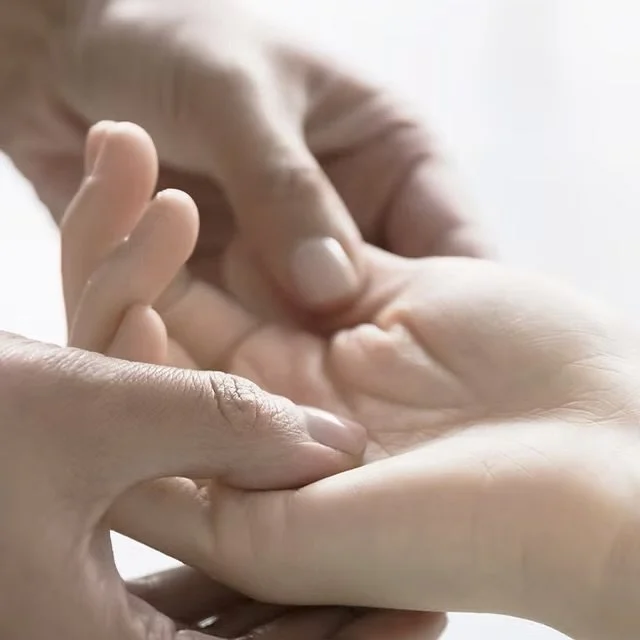
Halfway through the session, I opened my eyes and asked her if she was okay.
I hadn't planned to say anything. I was supposed to be the one receiving, the one practicing stillness and silence, the one letting go. But something in the room had shifted, and my body noticed it before my mind caught up.
I anticipated this study would teach me about muscle tension, mobility, and pain patterns. By weeks three and four, I understood I was also going to learn something about relationship, specifically the relationship between the person receiving care and the person providing it.
Week Three: When the Experience Changed
By the third session, I had developed a clear expectation of what my sessions would feel like. My body had grown familiar with a certain rhythm and pressure, the particular way this practitioner moved through a session, the order she worked in, the depth she tended to settle into.
This session broke that pattern. The touch was lighter, almost hesitant, the rhythm unfamiliar, and I found myself less connected to what was happening than in previous weeks. My first instinct was mildly territorial, a small, half-embarrassing thought along the lines of this isn't how she usually does it. Rather than sitting in that judgment, I stayed curious about it instead.
What came next is harder to describe cleanly, but I want to try, because it's honest. As she worked, I became aware of something beyond the physical. It felt less like a thought I was having and more like data I was receiving, small, wordless impressions about her state that I hadn't asked for and couldn't quite place. I've always had a strong capacity to read people this way, to pick up on what someone is carrying before they say a word, and lying still with my eyes closed seemed to sharpen it rather than quiet it. It didn't feel good. It felt like absorbing something that wasn't mine, and my body responded the way it apparently always has: by trying to put a wall up.
That wall is an old friend of mine. It's the same instinct that had me requesting a different body to work on with every new patient back in massage school, avoiding the kind of repeated, layered familiarity that this entire study is now asking me to sit inside of. In the moment, on the table, I recognized it clearly for maybe the first time: this is why I don't love being touched by unfamiliar people. Not fear of the touch itself, but fear of what I might pick up along with it.
I don't remember deciding to speak. I just heard myself ask, quietly, are you doing okay today? There was a pause. Then, I'm fine. Then, actually, no. She didn't go into detail, and I didn't ask her to. She said enough for me to understand that something outside of work had been sitting heavy on her that week, and I let it stay there, unexamined, because it wasn't mine to hold. But the shift in the room between her first answer and her honest one was unmistakable. The pressure, the intention, the sense of connection, all of it had already changed before either of us said a word, which was exactly what had pulled me out of my own stillness in the first place.
What I noticed was this: the quality of touch is shaped not only by the hands doing the work, but by the state of the person behind those hands. That's not a criticism of her. It's simply true, and it's true of every practitioner, including me, on the days I show up carrying something of my own.
This gave me an important reflection as a clinician. The practitioner enters the treatment room as a full human being, not only as a set of trained hands. Presence is part of the technique, not separate from it.
It also gave me a more personal one. I noticed my instinct, even while lying on the table receiving care, to want to support the person caring for me. That instinct is not wrong, but it raised a real question for my own practice of receiving: can I allow myself to be cared for without immediately stepping into the role of caregiver myself? For anyone drawn to healing work, that is worth sitting with.
I came back to an answer I already believed as a clinician but hadn't fully applied to myself. A practitioner's responsibility is not to carry the patient's experience for them. It's to create a safe, grounded environment where the patient can move through their own process. That distinction runs both directions. My job wasn't to fix what my practitioner was going through that day, and it wasn't my job to manage my own healing from a place of vigilance either. Both roles ask for the same thing: presence without ownership.
Research across healthcare disciplines, not just massage, consistently points to the relationship itself as part of the outcome. Trust, communication, and a provider's genuine presence measurably shape how care is received, independent of technique alone. Sitting on the table that week, I wasn't just observing a personal moment between two people. I was feeling a documented, studied phenomenon happen directly to me.
Week Four: A Quieter Shift
The fourth week was physically straightforward, a deep tissue session that I simply enjoyed. My body responded well to deeper pressure, and there wasn't a dramatic emotional or energetic shift to report, no unexpected conversation, no unfamiliar rhythm, just an hour of steady, competent work, the room quiet, my breathing slow, nothing asking to be noticed beyond the pressure itself.
What did shift was something quieter and more internal. In the days surrounding that session, I found myself reflecting on relationships, acceptance, and what it means to hold care for someone without needing them to change. That reflection didn't originate on the table. But the increased body awareness I had been building over the previous weeks seemed to carry into how I was noticing my own thoughts more generally, as though the practice of paying closer attention to my body had quietly taught me to pay closer attention to everything else too.
I didn't have language yet for what had happened in week three, that sense of reading someone else's state through my own body. I would find better language for it later in this study, once I understood it wasn't just intuition. It had a name.
The Larger Pattern
Massage research consistently supports benefits related to relaxation, stress reduction, and pain management. Many people also report emotional experiences during bodywork, particularly when the body enters a state of deep relaxation. A session does not necessarily release one specific emotion tied to one specific muscle. More likely, therapeutic touch creates the conditions for a person to notice sensations, thoughts, and feelings that were already present beneath the surface of daily life.
For my own patients, this reframes what "results" can look like. A person may not simply need their painful area addressed. They may need the experience of being consistently, safely attended to, long enough that their body and their emotional awareness both have room to speak.
The hands may begin the conversation. But the body decides how it responds.
I keep coming back to that moment of opening my eyes and asking a question I hadn't planned to ask. I still don't fully know what made me do it. But I know it taught me something I couldn't have learned with my eyes closed.
Coming Next
Part Four:
The breathing pattern that finally let me separate a knot in my shoulder from the fear I'd been holding around it.
Clinical Disclaimer:
This article is part of a practitioner led personal self-study and reflective exploration of therapeutic massage, not a controlled clinical trial. Individual responses to massage therapy vary widely. Details involving other individuals have been generalized or omitted to protect their privacy.
The Body Begins to Speak
A 12-Week Clinical Self-Study on Therapeutic Touch. Part Two: Awareness, Guarding, and Learning How to Receive.
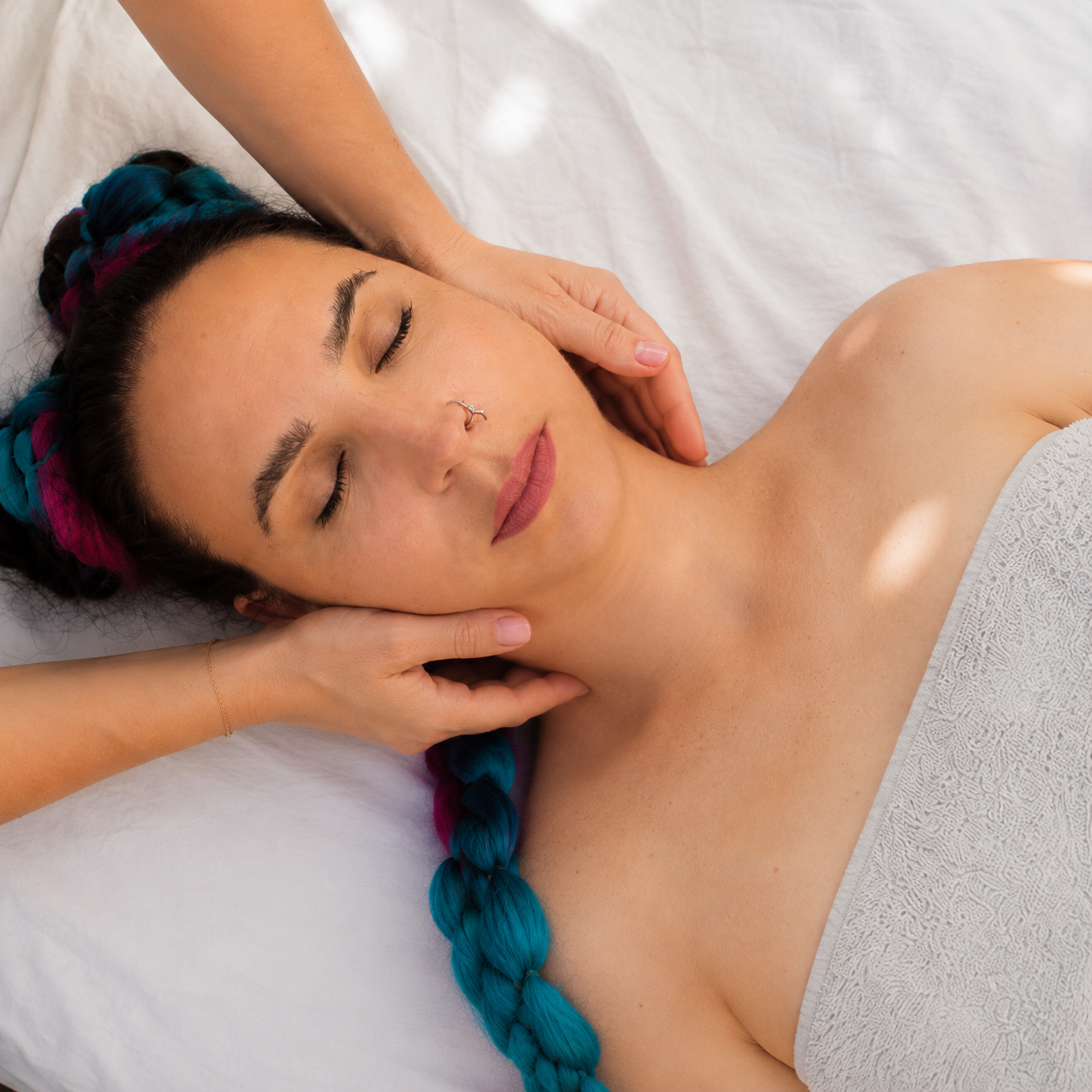
The region that told me the most about my own body turned out to be the one I never suspected. Not my hips, where fear surfaced first, or my legs, where the guarding ran deepest and stayed longest, but my neck: quiet, unremarkable, and holding more than anywhere else. I didn't know that yet in week one. I only found it because I kept showing up, week after week, long enough for my body to stop performing relaxation and start actually telling the truth.
That truth came slowly, and mostly in silence.
Week One: Meeting My Own Body
My first session was one hour of deep tissue work, and it was also the first time in a long while that I had been completely silent, on either side of the table. The room was warm, lit low, the kind of quiet that has a texture to it, the faint smell of oil, a heated table against my back. As a licensed massage therapist, I had expected this study to teach me more about technique, about tension patterns and mobility and the mechanics I already understood professionally. I didn't expect it to teach me, so quickly, how little I understood about my own relationship to receiving. As the therapist began moving and repositioning my body, I felt a clear pattern of clenching, a kind of muscular bracing that arrived before I had consciously decided to resist anything. Around my hips and glutes especially, my breath shortened. I noticed myself trying to help, to anticipate the stretch, to control the movement rather than simply allow it. There was a moment, small and a little embarrassing, where I actually laughed under my breath at myself: after years of guiding other people into stillness, my own body wasn't cooperating at all.
Later, I understood there was a name for what I'd felt. The nervous system is constantly scanning for safety, a process researchers call neuroception, largely outside conscious awareness. It shapes breath, muscle tone, and readiness to move before the thinking mind even weighs in. My hips didn't need permission from me to brace. They had already decided, on their own terms, whether the room was safe.
There was one unexpected moment of relief. When the therapist worked on my feet, I felt my digestive system respond almost immediately: contracting, releasing, audibly moving. It was a small, strange reminder that the body is far more connected than a diagram of isolated muscles suggests.
By the end of the session, I had noticed shifts in breath rhythm and even in the rhythm of my own heartbeat. None of this was dramatic. But it was the first real evidence of something I already believed intellectually and was now feeling directly: knowing the body professionally is not the same as knowing how to let it go.
Week Two: Where I Hold Tension
The second week brought the clearest physical finding of the early study. My trapezius, sternocleidomastoid, and levator scapulae, the muscles running through the neck and upper shoulder girdle, held more tension than anywhere else in my body. This would become a recurring thread throughout the entire twelve weeks, and, as I would learn much later, the doorway into some of the most significant changes of the entire study.
Alongside the physical tension, I noticed something emotional beginning to surface. Over the course of that week, I experienced what felt like a slow release of grief, not tied to any single event, just a background weight lifting. I want to be careful here. Emotional experiences during massage vary enormously between people and cannot always be traced directly to a specific tissue change. What I can say is that increased body awareness created the space to notice feelings that were likely already present, waiting to be seen.
I also noticed, again, the same protective pattern from week one. When my limbs were moved, particularly my legs, there was an involuntary contraction, something closer to fear than resistance. It happened faster than thought.
What This Told Me
Before the body can release anything, it has to become aware of what it has been holding. That was the real lesson of these first two weeks, more than any specific muscle or technique.
As a practitioner, I am used to observing this in patients: the guarding, the shortened breath, the flinch before a stretch even begins. Experiencing it from the other side of the table made it real in a way that years of watching it in others never had. My body had its own intelligence, and its own memory of protection, regardless of what my professional mind already understood. More than once, I caught a small voice in my head trying to direct the session, wanting to say stay there longer, or that's not quite the spot. I didn't act on it, not yet, but I noticed it was there.
Many of my patients arrive with a diagnosis and a painful area they want addressed. But behind every symptom is a person carrying a nervous system shaped by history, adaptation, and years of quiet self-protection. These first two weeks reminded me that the work is rarely only about the muscle in question. It is about helping a person feel safe enough, consistently enough, to notice what they have been carrying.
The body speaks constantly, through breath, through tension, through resistance, through sensation most people never learn to name. The real question was never whether it was communicating. It was whether I was quiet enough to listen.
I didn't know it yet, but the neck tension I'd just found was about to become the thread that ran through nearly every session that followed, long after the fear in my hips had quietly resolved itself.
Coming Next
Part Three:
What happened the week my therapist's own state changed the entire quality of my session, and the question it raised about how much of receiving is really about the person giving.
Clinical Disclaimer:
This article is part of a practitioner led personal self-study and reflective exploration of therapeutic massage, not a controlled clinical trial. Individual responses to massage therapy vary widely. This content is intended to deepen clinical awareness and encourage thoughtful discussion, not to establish medical outcomes.
The Body as a Teacher
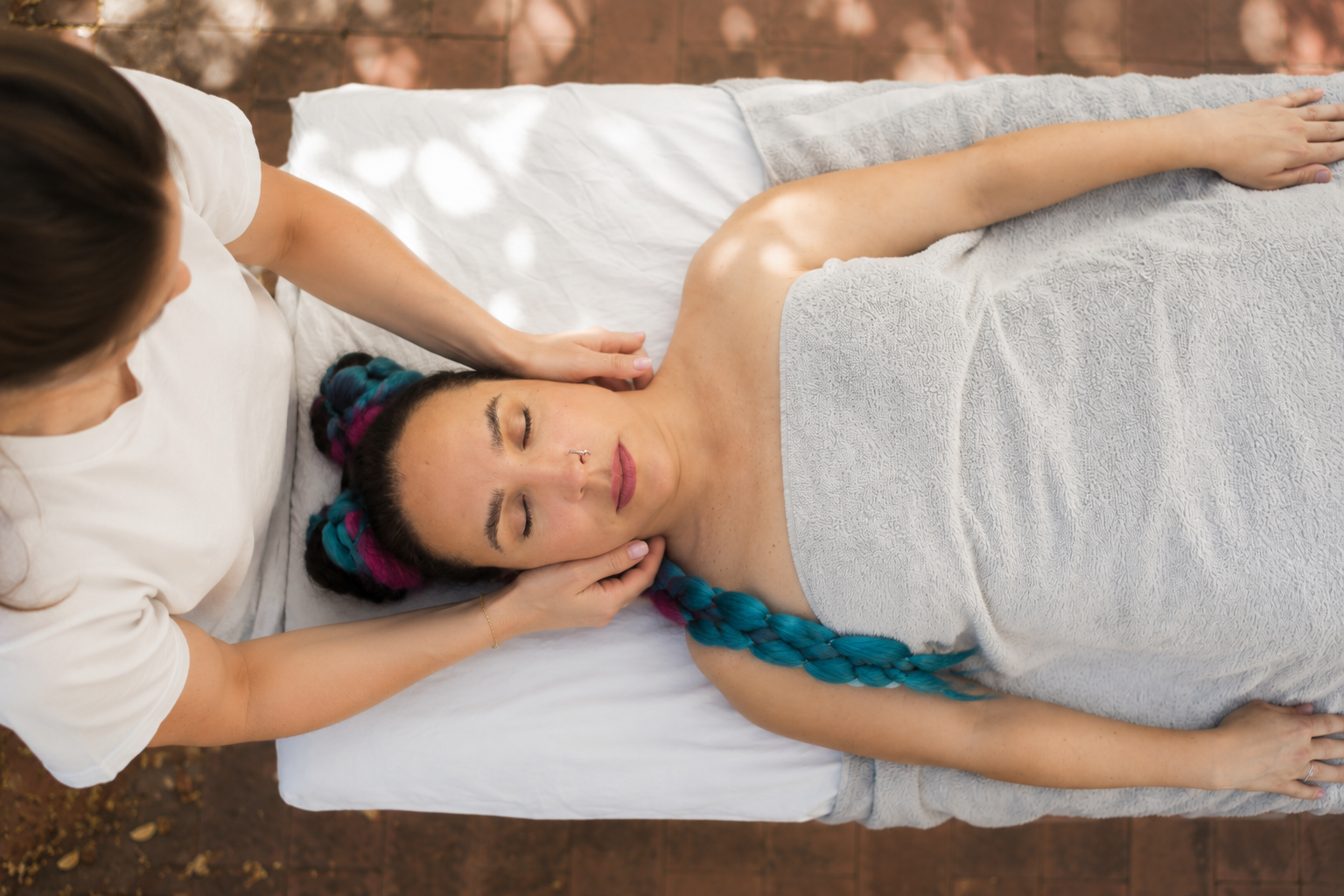
The Healer Becomes the Patient: A 12-Week Clinical Self-Study Into the Transformative Power of Therapeutic Touch
Before I could truly guide healing, I had to experience receiving it.
The first time she moved my hip, my body flinched before I told it to.
I felt it happen in real time: a clench, a held breath, a small involuntary bracing against a movement that posed no threat at all. I am a licensed massage therapist. I know exactly what that muscle was doing and exactly why it didn’t need to. And still, my body did it anyway.
That moment became the real beginning of this study, long before I understood what it meant.
For years, I have placed my hands on the bodies of others. I have listened to the language of muscles, studied the architecture of the human body, and learned how tension reveals itself through posture, movement, restriction, and pain. I have witnessed the moments when someone’s shoulders finally soften, when breath returns to the body, when a person who has carried years of discomfort finally feels relief.
But there was one body I had not fully studied: my own.
As a massage therapist, I have spent countless hours learning how to facilitate healing. Yet I realized that understanding healing intellectually is different from experiencing it personally. So I made a decision. I stepped away from the practitioner’s side of the table. I became the recipient. I became the patient.
For twelve weeks, I surrendered myself to the experience of receiving therapeutic massage and documented what unfolded, not only within my muscles and tissues, but within my nervous system, my emotions, my thoughts, and my awareness. What began as a personal experiment became a journey into understanding what truly happens when the human body is given consistent attention, safety, and intentional touch. Some of what I found, I expected. Some of it, I am still making sense of.
The Question That Changed My Practice
The inspiration for this self-study came from my evolving work with veteran community members and individuals seeking therapeutic care for chronic pain, injuries, and physical limitations.
Many patients arrive with a diagnosis, a painful area, a restricted movement pattern, a symptom they want addressed. But behind every symptom is a person. Someone with a history, with experiences stored in their nervous system, who has adapted, protected, endured, and carried life within their body.
As I continued working with patients, I found myself asking a deeper question. What happens when we treat the whole person instead of only the place where pain appears? What happens when therapeutic touch becomes consistent, when the body is repeatedly reminded that it is safe enough to soften? What happens beyond the muscles?
The Vulnerability of Receiving
There is a unique vulnerability in receiving care. As practitioners, we are comfortable giving. We understand assessment, technique, how to create an environment for another person to relax. But allowing ourselves to be the one lying on the table requires something different. It requires surrender, trust, and letting go of the desire to control the outcome.
Before beginning this study, I was cautious about seeing patients repeatedly. As someone highly sensitive to the therapeutic environment, I was deeply aware of the importance of boundaries, practitioner preservation, and maintaining a healthy clinical relationship. During my massage therapy clinical training, I specifically requested opportunities to work with different individuals rather than repeatedly treating the same person. At the time, I believed this expanded my skills.
What I did not yet understand was the healing power of continuity. The body does not always transform through a single moment. Sometimes it transforms through relationship, through consistency, through being witnessed over time.
My work with veteran patients changed my perspective. I began to understand that ongoing care is not simply repetition. It is a process.
The Purpose of This Study
This 12-week clinical self-study was created to explore the experience of receiving consistent therapeutic massage from the inside out. This was not a controlled clinical trial, and it was not intended to represent every individual’s response to massage therapy. Instead, it was a practitioner-led exploration of my own body, awareness, and healing process.
I wanted to understand how the body responds when it is consistently supported. What patterns reveal themselves when we slow down enough to listen. How the nervous system responds to intentional touch. What emotions, memories, or awareness arise when the body begins to release long-held patterns. And how this understanding could transform the way I care for others.
The Journey
For twelve weeks, I received weekly therapeutic massage sessions from the same practitioner, a deliberate choice, not a convenience. Keeping that one variable constant meant that whatever changed over the course of the study, in my body, my nervous system, or my awareness, couldn’t be explained away by inconsistent technique or an unfamiliar hand. Sessions ranged from one to two hours and incorporated deep tissue and therapeutic massage techniques. After each session, I documented observations across four areas.
The Physical Body. Muscular tension, tissue changes, mobility, areas of restriction, sensations during treatment.
The Nervous System. Breath patterns, guarding responses, relaxation capacity, reactions to movement and touch.
The Emotional Body. Memories, emotional responses, internal reflections, shifts in awareness.
The Practice of Healing. Practitioner presence, therapeutic relationship, treatment planning, integrating medical massage with holistic care.
By the end of the study, one region of my body had told me more about chronic holding than a decade of studying other people’s bodies ever had. I’ll get to that.
What I Discovered
I began this study thinking I was going to learn more about massage. What I discovered was that I was learning more about being human.
The body is not simply tissue, anatomy, or a collection of muscles waiting to be corrected. It is an intelligent, adaptive system constantly communicating through tension, through breath, through sensation, through the places where we hold, protect, and resist. The question is not whether the body is communicating. The question is whether we are present enough to listen.
A New Vision of Care
This journey has become the foundation for the next evolution of my practice at Yin Yang Healing Arts. My vision is to continue blending evidence-informed medical massage with a holistic understanding of the human experience, because pain is not only physical, healing is not only physical, and the human being is not only physical.
True care honors the interconnectedness of the body, the nervous system, the mind, the emotions, the spirit, and the relationship we have with ourselves. That is the standard I now hold for every session in my practice, whether someone is on the table for the first time or the fiftieth.
The greatest lesson I received during this study was this: before I could ask another person to trust the healing process, I had to experience what it meant to trust it myself.
The body is not something to be conquered. It is not something to be silenced. It is something to be understood, to be honored, to be listened to.
The body is a teacher.
What I didn’t yet know, in that very first session, was how much my own body was still guarding, or how far that guarding reached beyond the muscle I thought I was watching.
Part One of the series: The Body as a Teacher: A 12-Week Clinical Self-Study of Therapeutic Touch
Coming next, Part Two: the moment I realized that knowing anatomy and knowing how to let go are not the same thing, and what my own nervous system did before I ever had the chance to relax.
Clinical Disclaimer
This article is a practitioner-led personal self-study and reflective exploration of therapeutic massage. The observations described represent my individual experience as both a licensed massage therapist and recipient of therapeutic bodywork over a twelve-week period.
This self-study is not a controlled clinical trial and is not intended to establish medical outcomes, replace scientific research, or suggest that all individuals will experience the same physical, emotional, neurological, or personal responses.
The purpose of this exploration is to deepen clinical awareness, encourage thoughtful discussion regarding the role of therapeutic touch, and explore how consistent massage therapy may influence the relationship between the body, nervous system, and overall well-being.
Individual responses to massage therapy vary based on many factors, including personal history, health status, physical condition, stress levels, lifestyle, and individual perception.
Future clinical exploration and research are needed to further understand the complex relationship between therapeutic touch, pain management, nervous system regulation, and whole-person care.

When the Body Remembers Before the Mind Does

Art by: Paula Loomis
There are certain moments in life when I feel hollow in a way that words cannot quite explain. Not sad exactly. Not broken. Just paused. As if something inside me is waiting for a signal, a permission slip to begin again.
It is usually in those moments that Kundalini yoga finds me.
I do not go searching for it with intention. It appears. A class suggestion. A memory resurfacing. A quieter inner nudge that says, try this again. And every time, I am a little surprised by how precise the timing feels, as if the practice knows something about me before I do.
I am both a student and a teacher of Kundalini yoga, and yet I do not live inside the practice. I move away from it. I forget it. I do not always teach it, and I do not always practice it. Still, when something inside me begins to stall, when my inner world tightens or grows quiet, it finds me again. Not as a demand, but as an invitation.
Kundalini yoga is often described as a spiritual discipline, but for me it feels more like a conversation with the body. A way of asking questions without words. A way of listening through breath, posture, and sensation rather than thought. I come to the mat not seeking answers, but willing to witness whatever begins to move.
At first, the experience is unmistakably physical. Breath shifts. Muscles stretch, tremble, contract, and release. Heat builds. The spine feels alive, as if energy is learning how to travel upward again. The nervous system responds before the mind has time to interpret.
What I slowly began to realize is that this practice is not only moving my body. It is reorganizing my brain.
The chemistry shifts. Neurons fire differently. Signals travel new pathways, altering how my body prepares to move, respond, and orient itself in space. Muscles engage with less force and more intelligence. Bones feel carried rather than commanded. Even the impulse to act arises from a different place.
It is mind-blowing to witness how breath and posture can influence the most microscopic processes inside the body. How something so ancient can reshape something so modern as neurological patterning. And yet, this is only the beginning.
As the body reorganizes, the mind expands. Thoughts arrive with more space around them. Old mental loops loosen their grip. New perceptions emerge quietly, without announcement. I feel my consciousness stretching, refining, noticing. It is as if I am receiving a new template for thought itself.
I am not forcing transformation. I am watching refinement happen.
Through breathwork, meditation, and repetition, I witness myself shifting. Not becoming someone new, but returning to something more original. My internal frequency changes, and with it, my experience of reality. The way I interpret situations. The way I respond to uncertainty. The way I trust my own inner signals.
This is where the experience becomes exhilarating and unsettling all at once.
Because when your inner world recalibrates, your outer world responds. Relationships shift. Desires refine themselves. Old expectations dissolve. Life begins to reorganize itself around a deeper alignment, and suddenly, the familiar no longer feels true.
And beneath all of it, there is a quiet request.
Pay attention. Breathe. Notice.
The deeper I go into these practices, the more trust is asked of me. Not blind faith. Not certainty. But embodied trust. Trust in my breath. Trust in my intuition. Trust in the intelligence moving through me that does not need my permission to exist.
That trust can feel intimidating. Because once you begin to listen, you cannot unhear. Once you feel the shift, you cannot unknow it. You are asked to move through the world without the old maps, guided instead by sensation, presence, and an inner knowing that grows stronger the more you honor it.
Through Kundalini yoga and breathwork, I have come to experience a force moving through us that cannot be controlled, yet can be met. Some call it God. Some call it Source. I experience it as a living intelligence, flowing through the body, responding to attention, breath, and willingness.
The breath becomes an interface. A bridge between the physical and the unseen. Between brain chemistry and consciousness. Through it, I experience both the illusion of control and the deeper truth of alignment.
I do not write this to convince anyone to practice Kundalini yoga or breathwork. I write it as an offering. A reminder that the body remembers what the mind forgets. That wisdom lives beneath our habits, our fears, and our carefully constructed identities.
Sometimes transformation does not arrive as a breakthrough. Sometimes it arrives as a quiet internal reorganization. A soft shift. A subtle return.
And sometimes, it begins the moment you notice your breath. The moment your body pauses. The moment something inside you whispers, try this again.
If you are reading this now, take a breath. Feel the weight of your body. Notice what is moving beneath the surface. You may find that what you need is already here, quietly waiting for you to see it.
#KundaliniYoga #BreathworkJourney #EmbodiedAwakening
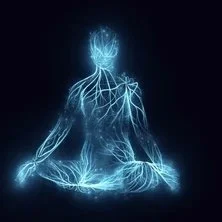
The Intelligence of Breath: Reflection on Sudarshan Chakra Kriya

Breath is one of the most subtle yet powerful tools for connecting with ourselves. Through conscious breathing, we can access deeper awareness, release tension, and restore balance in body, mind, and spirit. In this reflection, I share a personal experience with Sudarshan Chakra Kriya, a transformative breathwork practice I have engaged with for several years. This is a moment from my practice and a glimpse into what unfolds internally as the breath moves through the body, mind, and energy.
Sudarshan Chakra Kriya is a pranayama practice that was taught to me by Yogi Bhajan during my Kundalini Yoga Teacher Trainings. Rooted in the tradition of Kundalini Yoga, it is designed to cleanse the energy channels, balance the nervous system, and harmonize the physical, mental, and energetic aspects of being.
Breathwork has always felt like a bridge between the seen and the unseen, between what I can guide and what I must surrender to. After years of working with Sudarshan Chakra Kriya, pausing and returning to it, I notice that the practice continues to evolve. Each session feels both familiar and new. Each inhale and exhale carries its own story, and even moments of resistance or heaviness reveal something essential about the inner landscape.
I was seated, inhaling long and deep through my left nostril while keeping the right nostril closed. I engaged Mula Bandha, the root lock at the base of the spine, and began pumping my belly rhythmically, three pumps to one beat. The motion felt like a pulse, steady and alive, like the heartbeat of the earth moving within me. With each pump, awareness moved downward and inward, touching something fundamental, almost like uncovering a hidden current.
As I observed this pulse deepening, I became aware of its effects on both body and energy. Physically, this rhythmic engagement stimulates the diaphragm and tones the abdominal region, supporting circulation and oxygenation in the lower body. Energetically, it awakens the root and pelvic centers, lifting prana upward and beginning to clear the inner channels of vitality.
A few minutes in, the inhale began to feel heavy, almost dense, as if the air had to work to find its way in. At first, I felt impatient, noticing subtle resistance in the chest and belly. But staying with it, pumping through the weight, holding the breath, and exhaling through the right nostril revealed something profound. The heaviness itself was teaching me patience, presence, and surrender. The sensation mirrored a kind of inner purification, a clearing of stagnation that the mind might otherwise overlook. Energetically, layers of tension moved, making space for more refined awareness to flow. Mentally, I noticed old thoughts loosening and a subtle softening of habitual judgment and self-criticism.
Then, at some point, the breath changed. It became lighter and smoother. The inhale flowed more freely, almost entirely through the left side. The left nostril felt opened in a new way, shaped into a subtle channel that seemed to reach through the skull and illuminate the left side of my face from within. This was not a surface sensation but an inner movement of breath and awareness.
In yogic language, this could be described as the awakening of Ida Nadi, the cooling lunar current that governs intuition, calm, and inward reflection. Physiologically, left-sided breathing activates the parasympathetic nervous system, which supports rest, safety, and integration. It was as if the breath itself was guiding awareness, like a gentle river carving its path through a landscape, revealing hidden contours and quiet spaces I might otherwise overlook.
By the end of the session, it felt as though I was breathing from within the left side of my body, centered, quiet, and spacious. A distinct clarity and softness lingered beyond the practice, a feeling of inner luminosity and ease. I noticed how these shifts carried into daily life. Small moments of stress felt lighter, interactions felt more grounded, and even ordinary breath became a gentle guide back to presence.
Each time I return to this kriya, I am reminded that every breath has its own intelligence. When we listen closely enough, the body begins to teach us what it needs to release, what it is ready to open, and how it wishes to balance itself. Even when the breath feels heavy or the process uncertain, presence itself becomes the teacher.
Through long practice, I have come to understand that every session unfolds across multiple layers. The muscular and respiratory systems shape the physical rhythm of breath. The nervous system mediates our state of being. The energetic body reflects and directs consciousness. Sudarshan Chakra Kriya engages all of these layers simultaneously, creating a bridge between breath and awareness, matter and energy.
Invitation to Practice
Even a few minutes of focused breathing can reveal subtle shifts and insights. You might try this now. Sit comfortably and inhale gently through your left nostril while keeping the right nostril closed. Lightly engage the base of your spine and notice the movement of your belly with each breath. Exhale fully through the right nostril. Observe the sensations, the rhythm, and the quiet awareness behind each inhale and exhale. Allow yourself to simply be with the breath and notice what arises.
Personal Note
I have practiced Sudarshan Chakra Kriya for several years, including intensive periods that brought me into extended meditative states. Every practitioner’s experience is unique. The sensations, shifts, and insights I describe here are what unfolded for me. My hope is that sharing this reflection supports others in their own breathwork journey, offering a window into the depth and quiet transformation that arise when we fully engage with the intelligence of our own breath.
#ConsciousBreath,#SacredStillness