When the Body Releases
A 12-Week Clinical Self-Study on Therapeutic Touch. Part Three: Emotional Processing and the Therapeutic Relationship.
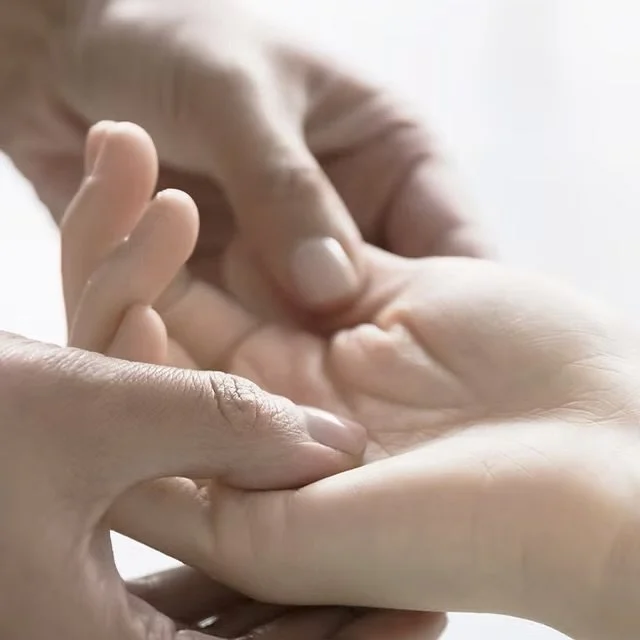
Halfway through the session, I opened my eyes and asked her if she was okay.
I hadn't planned to say anything. I was supposed to be the one receiving, the one practicing stillness and silence, the one letting go. But something in the room had shifted, and my body noticed it before my mind caught up.
I anticipated this study would teach me about muscle tension, mobility, and pain patterns. By weeks three and four, I understood I was also going to learn something about relationship, specifically the relationship between the person receiving care and the person providing it.
Week Three: When the Experience Changed
By the third session, I had developed a clear expectation of what my sessions would feel like. My body had grown familiar with a certain rhythm and pressure, the particular way this practitioner moved through a session, the order she worked in, the depth she tended to settle into.
This session broke that pattern. The touch was lighter, almost hesitant, the rhythm unfamiliar, and I found myself less connected to what was happening than in previous weeks. My first instinct was mildly territorial, a small, half-embarrassing thought along the lines of this isn't how she usually does it. Rather than sitting in that judgment, I stayed curious about it instead.
What came next is harder to describe cleanly, but I want to try, because it's honest. As she worked, I became aware of something beyond the physical. It felt less like a thought I was having and more like data I was receiving, small, wordless impressions about her state that I hadn't asked for and couldn't quite place. I've always had a strong capacity to read people this way, to pick up on what someone is carrying before they say a word, and lying still with my eyes closed seemed to sharpen it rather than quiet it. It didn't feel good. It felt like absorbing something that wasn't mine, and my body responded the way it apparently always has: by trying to put a wall up.
That wall is an old friend of mine. It's the same instinct that had me requesting a different body to work on with every new patient back in massage school, avoiding the kind of repeated, layered familiarity that this entire study is now asking me to sit inside of. In the moment, on the table, I recognized it clearly for maybe the first time: this is why I don't love being touched by unfamiliar people. Not fear of the touch itself, but fear of what I might pick up along with it.
I don't remember deciding to speak. I just heard myself ask, quietly, are you doing okay today? There was a pause. Then, I'm fine. Then, actually, no. She didn't go into detail, and I didn't ask her to. She said enough for me to understand that something outside of work had been sitting heavy on her that week, and I let it stay there, unexamined, because it wasn't mine to hold. But the shift in the room between her first answer and her honest one was unmistakable. The pressure, the intention, the sense of connection, all of it had already changed before either of us said a word, which was exactly what had pulled me out of my own stillness in the first place.
What I noticed was this: the quality of touch is shaped not only by the hands doing the work, but by the state of the person behind those hands. That's not a criticism of her. It's simply true, and it's true of every practitioner, including me, on the days I show up carrying something of my own.
This gave me an important reflection as a clinician. The practitioner enters the treatment room as a full human being, not only as a set of trained hands. Presence is part of the technique, not separate from it.
It also gave me a more personal one. I noticed my instinct, even while lying on the table receiving care, to want to support the person caring for me. That instinct is not wrong, but it raised a real question for my own practice of receiving: can I allow myself to be cared for without immediately stepping into the role of caregiver myself? For anyone drawn to healing work, that is worth sitting with.
I came back to an answer I already believed as a clinician but hadn't fully applied to myself. A practitioner's responsibility is not to carry the patient's experience for them. It's to create a safe, grounded environment where the patient can move through their own process. That distinction runs both directions. My job wasn't to fix what my practitioner was going through that day, and it wasn't my job to manage my own healing from a place of vigilance either. Both roles ask for the same thing: presence without ownership.
Research across healthcare disciplines, not just massage, consistently points to the relationship itself as part of the outcome. Trust, communication, and a provider's genuine presence measurably shape how care is received, independent of technique alone. Sitting on the table that week, I wasn't just observing a personal moment between two people. I was feeling a documented, studied phenomenon happen directly to me.
Week Four: A Quieter Shift
The fourth week was physically straightforward, a deep tissue session that I simply enjoyed. My body responded well to deeper pressure, and there wasn't a dramatic emotional or energetic shift to report, no unexpected conversation, no unfamiliar rhythm, just an hour of steady, competent work, the room quiet, my breathing slow, nothing asking to be noticed beyond the pressure itself.
What did shift was something quieter and more internal. In the days surrounding that session, I found myself reflecting on relationships, acceptance, and what it means to hold care for someone without needing them to change. That reflection didn't originate on the table. But the increased body awareness I had been building over the previous weeks seemed to carry into how I was noticing my own thoughts more generally, as though the practice of paying closer attention to my body had quietly taught me to pay closer attention to everything else too.
I didn't have language yet for what had happened in week three, that sense of reading someone else's state through my own body. I would find better language for it later in this study, once I understood it wasn't just intuition. It had a name.
The Larger Pattern
Massage research consistently supports benefits related to relaxation, stress reduction, and pain management. Many people also report emotional experiences during bodywork, particularly when the body enters a state of deep relaxation. A session does not necessarily release one specific emotion tied to one specific muscle. More likely, therapeutic touch creates the conditions for a person to notice sensations, thoughts, and feelings that were already present beneath the surface of daily life.
For my own patients, this reframes what "results" can look like. A person may not simply need their painful area addressed. They may need the experience of being consistently, safely attended to, long enough that their body and their emotional awareness both have room to speak.
The hands may begin the conversation. But the body decides how it responds.
I keep coming back to that moment of opening my eyes and asking a question I hadn't planned to ask. I still don't fully know what made me do it. But I know it taught me something I couldn't have learned with my eyes closed.
Coming Next
Part Four:
The breathing pattern that finally let me separate a knot in my shoulder from the fear I'd been holding around it.
Clinical Disclaimer:
This article is part of a practitioner led personal self-study and reflective exploration of therapeutic massage, not a controlled clinical trial. Individual responses to massage therapy vary widely. Details involving other individuals have been generalized or omitted to protect their privacy.